

Window Tinting in Rio Vista Isles, Fort Lauderdale can help waterfront drivers manage strong sunlight, reflected glare, cabin heat, UV exposure, and privacy while traveling through one of Fort Lauderdale’s canal-lined residential areas. For drivers who live near the New River, Intracoastal Waterway, or the neighborhood’s waterways, choosing the right tint means looking beyond how dark the glass appears.
Rio Vista is a waterfront Fort Lauderdale neighborhood with canal frontage and access to the New River and Intracoastal system. That setting gives local drivers plenty of exposure to open sky and water. Water can reflect sunlight and UV radiation, which is one reason glare and sun exposure deserve attention when choosing automotive window film.
305 Auto Customs installs STEK ceramic window tint for cars, trucks, SUVs, luxury vehicles, Teslas, and work vehicles. Our Miami, FL shop serves drivers from Fort Lauderdale, FL, Davie, FL, Broward County, FL, Miami-Dade County, FL, and other South Florida communities.
If you are researching Window Tinting in Rio Vista Isles, Fort Lauderdale, this guide covers the tint features that can matter most for waterfront drivers.
Table of Contents
- Why Window Tinting in Rio Vista Isles, Fort Lauderdale Fits Waterfront Driving
- Why Water Can Make Sun Exposure More Noticeable
- Ceramic Tint for Heat Control
- STEK Ceramic Window Tint
- Tint for Reflected Glare
- UV Exposure Near Water
- Privacy for Waterfront Drivers
- Choosing Tint for Front Side Windows
- Choosing Tint for Rear Side Windows
- Rear Glass Tint
- Windshield Tint and Glare Strips
- Understanding Tint Percentages
- Florida Window Tint Legal Limits
- Carbon vs Ceramic vs Graphene Ceramic Tint
- Tint for Luxury and Performance Vehicles
- Tint for SUVs and Trucks
- Tesla Window Tint
- What to Expect During Installation
- Caring for New Window Tint
- Other Vehicle Protection Services
- Schedule Window Tinting in Rio Vista Isles, Fort Lauderdale
- Window Tint FAQs
- Sources
Why Window Tinting in Rio Vista Isles, Fort Lauderdale Fits Waterfront Driving
Rio Vista is located south of the New River and near Fort Lauderdale’s Intracoastal waterways. Canal-front streets, docks, boats, and waterfront homes are part of the area.
That local setting can change what drivers notice inside their vehicles.
Sunlight may come through the side glass while driving along waterfront streets. Light can also reflect from water, pavement, nearby buildings, and other bright surfaces.
The U.S. Environmental Protection Agency warns that water can reflect UV radiation and increase UV exposure. The World Health Organization also lists water among surfaces that reflect solar UV radiation.
This does not mean a waterfront driver needs the darkest tint available.
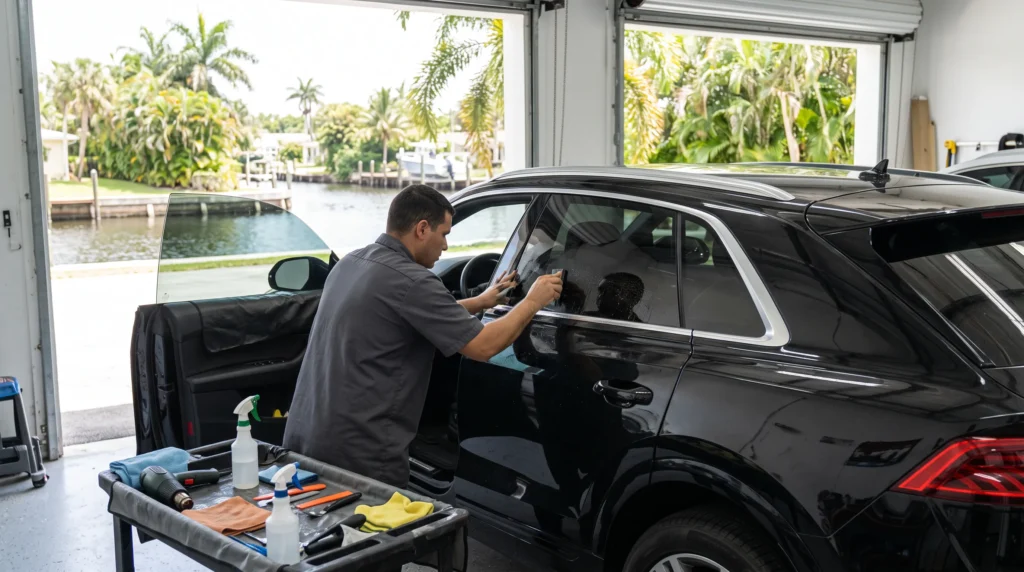
It means someone considering Window Tinting in Rio Vista Isles, Fort Lauderdale may want to compare heat rejection, glare reduction, UV protection, visible light transmission, and outward visibility rather than choosing film by appearance alone.
Why Water Can Make Sun Exposure More Noticeable
Waterfront roads can create a different light environment from heavily shaded inland streets.
When sunlight hits water, some of that light is reflected.
Drivers may notice brightness coming from more than one direction, especially when traveling near canals, marinas, bridges, or open waterfront areas.
The EPA advises people to watch for bright surfaces such as water because they can reflect UV radiation. The World Health Organization also states that reflective surfaces can increase UV exposure.
Window film cannot control every source of glare outside the vehicle, but it can reduce the amount of visible light passing through treated automotive glass.
That can be useful for someone who regularly travels through Fort Lauderdale, FL waterfront areas.
Ceramic Tint for Heat Control
Cabin heat is one of the main reasons South Florida drivers choose ceramic tint.
Sunlight passes through automotive glass and carries energy into the passenger compartment. Seats, dashboards, steering wheels, consoles, and interior trim can all warm up while the vehicle sits outside.
Ceramic window films are designed to reject part of the solar and infrared energy reaching the glass.
That means film darkness is not the only measurement worth looking at.
A light ceramic film may provide strong heat-control properties while allowing more visible light through than a dark carbon film.
For Window Tinting in Rio Vista Isles, Fort Lauderdale, this can matter for drivers who want heat control without making every window look extremely dark.
STEK Ceramic Window Tint
305 Auto Customs is STEK certified and a STEK vendor.
STEK’s automotive tint lineup includes carbon, nano-ceramic, and graphene-infused ceramic films.
The current LUNARAY automotive range includes:
- ACTION+ carbon tint
- SMART+ nano-ceramic tint
- NEX+ graphene-infused ceramic tint
STEK states that SMART+ is designed to reject more solar energy than its carbon film.
NEX+ uses graphene-infused ceramic film and is positioned by STEK for stronger heat rejection.
Drivers interested in Window Tinting in Rio Vista Isles, Fort Lauderdale can discuss the available STEK films with 305 Auto Customs before choosing a shade.
Tint for Reflected Glare
Glare can enter from the front, sides, or rear of a vehicle.
For waterfront drivers, reflected light from water can add another bright surface to the surrounding environment.
Window tint reduces visible light transmission through treated glass.
A lower visible light transmission percentage usually produces darker glass and cuts more visible light.
The goal should not automatically be the darkest legal tint.
Nighttime driving still matters.
Rio Vista Isles drivers may travel from bright waterfront streets into shaded residential roads, parking garages, or darker areas after sunset. A film should fit both daytime and nighttime use.
When discussing tint, tell the installer when you normally drive and whether glare is one of your main concerns.
UV Exposure Near Water
UV protection is another reason drivers look into ceramic tint.
The EPA states that water can reflect UV radiation. The World Health Organization also notes that reflected UV can contribute to overall exposure.
The American Cancer Society states that normal car windows tend to block most UVB radiation but block less UVA. It also notes that tinted windows can block more UVA, depending on the type of tint.
STEK lists high UV rejection across its automotive tint lines.
For drivers spending a lot of time on roads near the water, UV protection can be worth discussing even if they prefer a lighter tint shade.
Film can also reduce UV exposure reaching interior materials such as:
- Leather
- Vinyl
- Dashboard surfaces
- Door panels
- Upholstery
- Interior trim
Window tint should not be treated as a replacement for sunscreen or other personal sun protection.
Privacy for Waterfront Drivers
Privacy can also matter in residential waterfront areas.
Large vehicle windows can make the cabin easy to see from nearby cars, sidewalks, driveways, docks, parking lots, and streets.
Tint can reduce visibility into the passenger compartment.
Drivers may want more privacy when:
- Parking near restaurants or marinas
- Leaving a vehicle in residential areas
- Carrying personal items
- Traveling with family
- Driving a work vehicle
- Sitting in the vehicle while parked
Tint does not make belongings secure, so personal property should still be kept out of sight.
Privacy level is closely tied to visible light transmission.
Lower-VLT film usually creates a darker appearance and makes the cabin harder to see from outside.
Florida law still controls how dark film can be on different windows.
Choosing Tint for Front Side Windows
The front side windows have a direct effect on driver visibility.
Florida Statute 316.2953 controls sunscreening material on side windows forward of or next to the driver’s seat.
Under the statute, qualifying material must have:
- At least 28% visible light transmission
- No more than 25% visible-light reflectance
The law applies when the film is applied to and tested on the vehicle’s glass.
This distinction matters because automotive glass already affects light transmission before aftermarket film is added.
A film labeled with one VLT number may produce a different finished reading once combined with the original glass.
Drivers considering Window Tinting in Rio Vista Isles, Fort Lauderdale should choose front-window film with the finished glass measurement in mind.
Choosing Tint for Rear Side Windows
Rear side windows give drivers more room to think about privacy and passenger comfort.
These windows can receive strong sunlight depending on the direction the vehicle is traveling.
Tint on rear side windows can help with:
- Heat
- Glare
- Privacy
- UV exposure
- Appearance
Some SUVs and trucks already have dark factory privacy glass behind the front seats.
Factory privacy glass can reduce visible light, but it does not automatically provide the same solar-control properties as ceramic film.
A ceramic film can still be applied to compatible factory glass when the driver wants added film performance.
Rear Glass Tint
Rear glass can make up a large portion of a vehicle’s exposed glass area.
Sloped rear windows on sedans, coupes, hatchbacks, and some performance vehicles can receive a large amount of sunlight.
Florida Statute 316.2954 controls windows behind the driver.
For many passenger vehicles, the statute permits film with:
- At least 15% visible light transmission
- No more than 35% visible-light reflectance
Certain multipurpose passenger vehicles may use rear film with at least 6% visible light transmission, subject to the other requirements in the statute.
Vehicle classification matters.
Ask about your vehicle type before choosing rear-window film.
Windshield Tint and Glare Strips
The windshield creates another tint decision.
Florida treats windshields differently from side and rear windows.
Florida Statute 316.2952 restricts sunscreening material on the windshield, apart from listed exceptions.
One permitted area involves transparent material near the upper portion of the windshield when it stays within the legal placement requirements.
A glare strip may help reduce overhead sunlight during parts of the day.
Drivers thinking about broader windshield film should discuss the current Florida rule with the installer before choosing a setup.
For a waterfront driver dealing with bright sun, the legal placement of the film matters just as much as the product.
Understanding Tint Percentages
Window tint percentages are usually discussed using visible light transmission, or VLT.
VLT describes how much visible light passes through the window.
A higher VLT lets more visible light through.
A lower VLT lets less visible light through and usually looks darker.
A darker film can increase privacy and reduce visible glare.
A lighter film can preserve more outward visibility.
Heat rejection is a separate issue.
A ceramic film does not need to be extremely dark to provide solar-control properties.
That is why drivers choosing Window Tinting in Rio Vista Isles, Fort Lauderdale should compare film type and VLT instead of using darkness as the only measurement.
Florida Window Tint Legal Limits
Florida tint rules cover light transmission, reflectance, windshield treatment, rear windows, vehicle classification, and compliance labeling.
For qualifying front side windows:
- Minimum visible light transmission: 28%
- Maximum visible-light reflectance: 25%
For rear glass on many passenger vehicles:
- Minimum visible light transmission: 15%
- Maximum visible-light reflectance: 35%
For certain multipurpose passenger vehicles:
- Rear glass may allow film with at least 6% visible light transmission
- The 35% reflectance limit still applies
Florida law can change.
Drivers should review the current statute before selecting film.
This article is general information and is not legal advice.
Carbon vs Ceramic vs Graphene Ceramic Tint
STEK gives drivers several film types to compare.
ACTION+ Carbon Tint
ACTION+ uses carbon construction.
This line can provide:
- Privacy
- UV rejection
- Glare reduction
- Heat rejection
- Neutral appearance
Carbon film may fit a driver whose main goals are shade, appearance, and privacy.
SMART+ Nano-Ceramic Tint
SMART+ uses nano-ceramic construction.
STEK states that SMART+ provides more solar energy reduction than its carbon film.
This can make it worth comparing for South Florida drivers who place more weight on cabin heat.
NEX+ Graphene-Infused Ceramic Tint
NEX+ combines ceramic film with graphene.
STEK positions NEX+ for stronger heat rejection in its automotive tint lineup.
A waterfront driver who parks outside for long periods or spends much of the day on the road may want to compare NEX+ with SMART+.
305 Auto Customs can discuss which STEK films are currently available for your vehicle.
Tint for Luxury and Performance Vehicles
Rio Vista Isles and the surrounding Fort Lauderdale area are home to drivers with many types of vehicles.
Luxury and performance-car owners may want tint that looks clean against the factory glass and body color.
Film choice can affect:
- Glass color
- Darkness
- Interior visibility
- Heat control
- Optical clarity
A film that is too dark for the driver’s routine may look good during the day but make nighttime driving harder.
A lighter ceramic film can be worth considering when heat control matters more than making the windows look nearly black.
Tint for SUVs and Trucks
SUVs and trucks often have factory privacy glass behind the front seats.
The front side windows may appear much lighter.
Some owners choose ceramic tint for the two front windows to create a more consistent appearance.
Others apply ceramic film to the rear factory glass as well.
Drivers should remember that the finished VLT of front windows still needs to comply with Florida law.
If the rear glass already appears dark, ask the installer how added film could affect the finished appearance and light transmission.
Tesla Window Tint
Tesla vehicles often have large glass areas.
That can make tint selection especially noticeable when it comes to heat, glare, and cabin brightness.
305 Auto Customs provides Tesla window tint services along with tint for other cars, trucks, SUVs, luxury vehicles, and daily drivers.
Tesla owners should discuss:
- Side-window coverage
- Rear glass
- Windshield options
- Existing glass
- Desired shade
- Heat-control goals
- Florida legal limits
The same general rule applies: choose the film based on its performance and your driving habits, not darkness alone.
What to Expect During Installation
Professional automotive tint installation starts with glass preparation.
The installer cleans the interior glass so loose dirt, hair, and debris are less likely to become trapped under the film.
Film is cut and shaped for each window.
Curved glass may require heat forming so the film follows the shape of the window.
An application solution is used when positioning the film.
The installer works the solution from beneath the film and checks the edges.
Fresh tint may show some temporary moisture or haze during the drying period.
Ask how long you should wait before rolling down the windows.
Caring for New Window Tint
New tint needs time to bond to the glass.
Do not roll the windows down until the installer gives you the go-ahead.
When cleaning tinted glass:
- Use a soft microfiber towel
- Use a cleaner approved for window film
- Avoid blades and scrapers
- Avoid rough pads
- Keep hard objects away from the film
Seat belt buckles, cargo, tools, and other objects can damage tint if they strike the inside glass.
If something looks wrong after the normal drying period, contact the installer before trying to repair or peel the film.
305 Auto Customs carries warranties on its products and services. Ask about the warranty that applies to your chosen tint before installation.
Other Vehicle Protection Services
Waterfront drivers may also think about exterior protection.
305 Auto Customs provides:
- Paint Protection Film
- Color PPF
- Ceramic Coating
- Vinyl Wrap
- Paint Correction
- Commercial Vehicle Wraps
- Marine Wraps
Paint Protection Film can be used on painted areas exposed to road debris.
Ceramic coating using Malbor Coatings can help with gloss and routine exterior care.
Vinyl wrap can change the exterior color or finish without repainting the vehicle.
Marine wraps are also available for customers with boats and other marine applications.
Window Tinting in Rio Vista Isles, Fort Lauderdale for Broward County Drivers
Rio Vista is a residential waterfront neighborhood in Fort Lauderdale, FL, with canal frontage near the New River and Intracoastal system.
Drivers from Rio Vista Isles are part of the broader Broward County, FL service area covered by 305 Auto Customs.
The shop also serves customers from:
- Fort Lauderdale, FL
- Davie, FL
- Broward County, FL
- Miami-Dade County, FL
- Miami, FL
305 Auto Customs is located at:
305 Auto Customs
19597 NE 10th Ave, Bay F, Building 6
Miami, FL 33179
Business hours:
- Monday through Friday: 8 AM to 6 PM
- Saturday and Sunday: 10 AM to 5 PM
Drivers traveling from Rio Vista Isles or another part of Fort Lauderdale, FL should call before making the trip so the team can discuss the vehicle, film choice, and appointment schedule.
Schedule Window Tinting in Rio Vista Isles, Fort Lauderdale
If you are comparing Window Tinting in Rio Vista Isles, Fort Lauderdale, call 305 Auto Customs at (305) 788-9933.
Tell the team:
- Your vehicle year, make, and model
- Which windows you want tinted
- Whether your main concern is heat
- Whether reflected glare bothers you
- How much privacy you want
- How often you drive at night
- Whether the vehicle already has factory privacy glass
305 Auto Customs can discuss STEK ceramic window tint options based on your vehicle and goals.
You can also visit the 305 Auto Customs contact page and request an appointment.
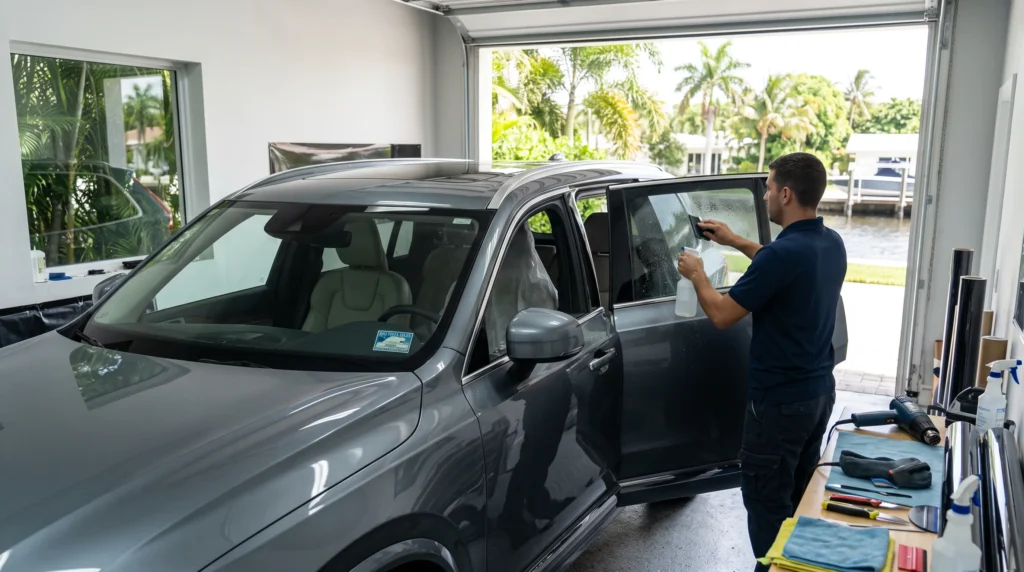
For waterfront drivers from Fort Lauderdale, FL, Broward County, FL, Davie, FL, Miami-Dade County, FL, and Miami, FL, ceramic window tint can provide a practical way to manage heat, glare, UV exposure, and privacy while keeping Florida’s tint requirements in mind.
Window Tint FAQs
1. Why might waterfront drivers want ceramic window tint?
Waterfront drivers can deal with direct sunlight plus light reflected from bright surfaces such as water. Ceramic film can reduce visible glare, reject part of the solar heat reaching the glass, block UV radiation, and provide added privacy.
2. Can water increase UV exposure?
Yes. The U.S. Environmental Protection Agency and World Health Organization both state that water can reflect UV radiation. That reflected radiation can contribute to overall UV exposure.
3. Does darker tint always block more heat?
No. Visible light transmission and heat rejection are different measurements. A lighter ceramic film may provide stronger solar-control properties than a darker film made with a different construction.
4. What is the Florida legal limit for front side window tint?
Florida Statute 316.2953 requires qualifying front side windows to have at least 28% visible light transmission when the film is applied to and tested on the vehicle glass. Visible-light reflectance may not exceed 25%.
5. Can SUVs use darker rear tint in Florida?
Certain vehicles that qualify as multipurpose passenger vehicles may use rear-window film with at least 6% visible light transmission, subject to the rest of Florida Statute 316.2954. Many passenger vehicles have a 15% minimum rear-window requirement.
6. Which STEK window film works for strong heat?
STEK offers ACTION+ carbon film, SMART+ nano-ceramic film, and NEX+ graphene-infused ceramic film. STEK positions SMART+ above its carbon film for solar heat rejection and NEX+ as its stronger heat-rejection option. Ask 305 Auto Customs which film is available for your vehicle.
7. How do I schedule Window Tinting in Rio Vista Isles, Fort Lauderdale?
Call 305 Auto Customs at (305) 788-9933 to discuss your vehicle, tint coverage, shade, and appointment availability. You can also use the contact form on the 305 Auto Customs website. The shop is located in Miami, FL and serves drivers throughout Broward County, FL and Miami-Dade County, FL.
Sources
- Rio Vista Neighborhood Information
- Publisher: City of Fort Lauderdale
- Publication Date: Current city resource
- Used to confirm Rio Vista as a recognized Fort Lauderdale neighborhood.
- Rio Vista, Fort Lauderdale Neighborhood Guide
- Publisher: LUXE Lauderdale
- Publication Date: August 20, 2026
- Used for current descriptions of Rio Vista as a waterfront neighborhood south of the New River with canal frontage.
- UV Alert
- Publisher: U.S. Environmental Protection Agency
- Publication Date: Current EPA resource
- Used for information explaining that bright surfaces such as water reflect UV radiation and can increase UV exposure.
- Ultraviolet Radiation
- Publisher: World Health Organization
- Publication Date: June 21, 2022
- Used for information on reflected UV radiation and water as a reflective surface.
- How to Protect Your Skin From UV Rays
- Publisher: American Cancer Society
- Publication Date: Current page, references accessed August 13, 2026
- Used for information about UVA passing through automotive glass and the role tinted windows can play in reducing UVA transmission.
- Automotive Window Tint
- Publisher: STEK USA
- Publication Date: Current product page
- Used for ACTION+, SMART+, and NEX+ automotive tint construction, UV protection, privacy, and heat-rejection information.
- SMART+ Nano Ceramic Window Tint
- Publisher: STEK USA
- Publication Date: Current product page
- Used for SMART+ ceramic film construction and solar and infrared heat-control information.
- NEX+ Graphene Infused Ceramic Tint
- Publisher: STEK USA
- Publication Date: Current product page
- Used for NEX+ graphene-infused ceramic construction and heat-rejection information.
- Florida Statute 316.2953: Side Windows; Restrictions on Sunscreening Material
- Publisher: Florida Senate
- Publication Date: Current Florida Statutes
- Used for the 28% minimum front-side visible light transmission and 25% maximum reflectance requirements.
- Florida Statute 316.2954: Windows Behind the Driver
- Publisher: Florida Senate
- Publication Date: 2026 Florida Statutes
- Used for rear-window visible light transmission, reflectance, and multipurpose passenger vehicle rules.
- Auto Window Tinting in Fort Lauderdale: Florida Legal Limits
- Publisher: 305 Auto Customs
- Publication Date: Current service article
- Used for 305 Auto Customs service coverage, STEK tint service, Fort Lauderdale service information, warranties, and Miami shop location.
- Contact 305 Auto Customs
- Publisher: 305 Auto Customs
- Publication Date: Current contact page
- Used for the Miami, FL shop address, phone number, and service-area information.
Is Ceramic Coating Worth It for Your Car in Davie, FL? | 305 Auto Customs
Is ceramic coating worth it for your car in Davie, FL? Learn how ceramic coating helps keep paint cleaner, adds gloss, and makes car care easier in South Florida.
Product Brand: Malbor Coatings
5
Pros
- Is ceramic coating worth it for your car in Davie, FL? Learn how ceramic coating helps keep paint cleaner, adds gloss, and makes car care easier in South Florida.
