

Window Film in Broward County can serve very different purposes depending on whether the glass is in a vehicle, home, or office. Automotive film can help drivers manage cabin heat, glare, UV exposure, and privacy. Residential film can address hot rooms, fading, glare, and privacy. Commercial window film can help offices deal with bright workspaces, screen glare, heat through large glass areas, and visibility from outside.
305 Auto Customs provides professional automotive window tint using STEK and Geoshield ceramic films for cars, trucks, SUVs, luxury vehicles, Teslas, and work vehicles. Our shop serves drivers from Broward County, FL, Davie, FL, Miami-Dade County, FL, Miami, FL, Fort Lauderdale, FL, Hollywood, FL, and nearby South Florida communities.
It helps to make one distinction before comparing your choices. Automotive, residential, and office window films are different product categories. The 305 Auto Customs website currently lists automotive window tint services. It does not list residential or commercial building-film installation. The home and office sections below are meant to help Broward County property owners understand how architectural films differ from automotive tint.
If your project involves a vehicle, call 305 Auto Customs at (305) 788-9933 or visit our contact page to discuss film, shade, glass coverage, and scheduling.
Table of Contents
- What Is Window Film in Broward County?
- Automotive vs Home vs Office Window Film
- Automotive Window Film for Broward County Drivers
- STEK and Geoshield Ceramic Automotive Tint
- Two Front Windows, All Sides, or Full Tint
- Automotive Film for Heat
- Automotive Film for Glare and Privacy
- Florida Automotive Window Tint Limits
- Home Window Film Options
- Residential Film for Hot Rooms
- Home Window Film for UV and Fading
- Residential Privacy and Decorative Films
- Office Window Film Options
- Office Film for Screen Glare
- Commercial Privacy Film
- Safety and Security Film
- Can Window Film Hurricane-Proof Glass?
- How to Compare Window Film
- Which Window Film Fits Your Project?
- Automotive Window Film From 305 Auto Customs
- Window Film FAQs
- Sources
What Is Window Film in Broward County?
Window Film in Broward County generally refers to thin film applied to existing automotive or architectural glass.
The purpose depends on the product.
Film can be made for:
- Cars and trucks
- SUVs
- Teslas
- Houses
- Condos
- Home offices
- Commercial offices
- Storefronts
- Conference rooms
- Other compatible glass surfaces
Automotive film is designed around vehicle glass, driving visibility, state tint laws, curved windows, and automotive use.
Architectural film is made for building glass.
Home and office films may focus on:
- Solar heat
- UV exposure
- Screen glare
- Privacy
- Decorative appearance
- Safety applications
- Interior fading
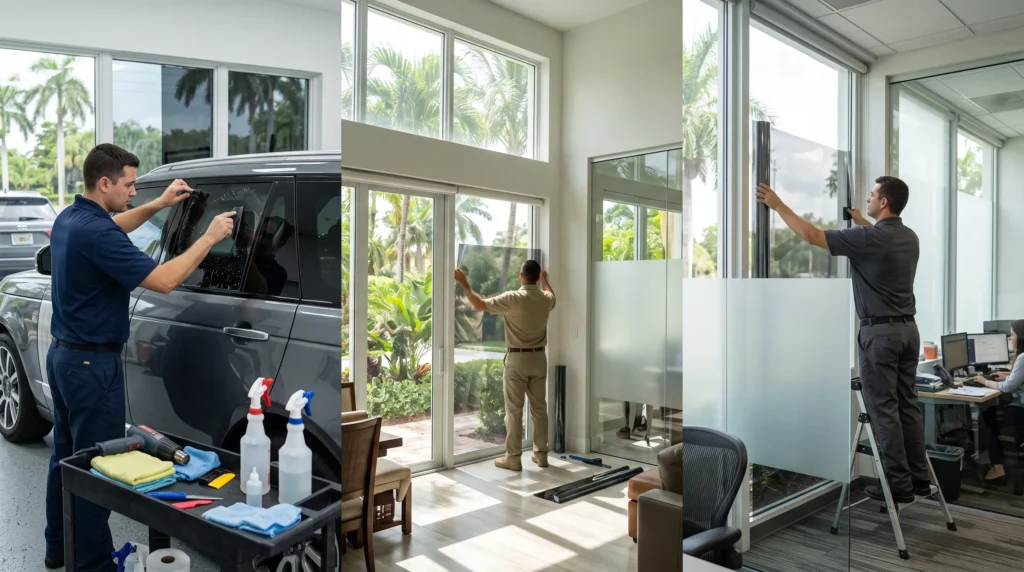
The correct product should match the type of glass and the intended use.
Automotive vs Home vs Office Window Film
Drivers and property owners sometimes use the word “tint” for every type of film, but vehicle film and architectural film should not be treated as interchangeable.
Automotive Film
Automotive window tint needs to account for:
- Driving visibility
- Visible Light Transmission
- Florida tint law
- Curved automotive glass
- Rear defroster lines
- Vehicle sensors
- Heat rejection
- Glare
- UV exposure
- Privacy
Home Film
Residential film is designed for building glass and may focus on:
- Rooms that receive strong afternoon sun
- Glare on televisions
- UV exposure
- Furniture and flooring exposure
- Privacy
- Solar heat entering through windows
Office Film
Commercial film can be used for:
- Workstation glare
- Conference-room privacy
- Heat near exterior glass
- UV exposure
- Decorative glass
- Storefront appearance
- Safety applications
A good starting point for Window Film in Broward County is deciding which of these three categories describes your project.
Automotive Window Film for Broward County Drivers
Automotive window film is the category offered by 305 Auto Customs.
Broward County, FL drivers spend plenty of time on roads such as I-95, I-595, Florida’s Turnpike, US-1, and local streets throughout Fort Lauderdale, FL, Hollywood, FL, Davie, FL, and surrounding communities.
Sun can enter through several areas of a vehicle:
- Windshield
- Driver window
- Front passenger window
- Rear door glass
- Quarter glass
- Rear glass
Ceramic automotive film can reduce the amount of solar energy and visible light entering through treated glass.
Drivers commonly look at tint for:
- Cabin heat
- Glare
- UV exposure
- Privacy
- Darker glass
- More consistent appearance
- Passenger comfort
305 Auto Customs installs automotive window tint packages for South Florida drivers.
STEK and Geoshield Ceramic Automotive Tint
305 Auto Customs currently lists STEK and Geoshield ceramic window tint on its automotive tint page.
Ceramic film differs from choosing tint solely by darkness.
A film can look fairly light while still being made for solar heat control.
This matters because visible light and solar energy are not the same measurement.
A driver may want a lighter film because they spend a lot of time driving at night.
Another driver may want darker legal glass for more privacy.
Someone else may care more about reducing heat than changing the exterior look of the vehicle.
That is why Window Film in Broward County should be selected after considering how the vehicle is used.
Two Front Windows, All Sides, or Full Tint
305 Auto Customs lists several automotive ceramic tint packages.
Two Front Windows
This package covers:
- Driver window
- Front passenger window
It can work well for an SUV or truck that already has dark factory privacy glass behind the front seats.
All Sides
This setup covers:
- Side windows
- Rear windows
- Rear glass
It gives the passenger compartment more film coverage than tinting only the front doors.
Full Tint
305 Auto Customs lists a full ceramic tint package covering:
- Side windows
- Rear glass
- Windshield
Windshield film should always be discussed with current Florida rules in mind.
The amount of glass being tinted can also affect installation time and the vehicle-specific quote.
Call (305) 788-9933 to discuss which package fits your vehicle.
Automotive Film for Heat
Heat is one of the main reasons drivers research Window Film in Broward County.
A vehicle can warm quickly when exposed to South Florida sun.
Solar energy enters through the glass and reaches:
- Seats
- Dashboard
- Steering wheel
- Console
- Door panels
- Passengers
Heat-rejecting automotive film is designed to reduce part of that solar energy.
The International Window Film Association lists heat control as one of the common uses for automotive film.
Do not assume that the darkest film provides the strongest heat control.
Film construction matters too.
Ask about the film series and published specifications instead of selecting tint only from a shade sample.
Automotive Film for Glare and Privacy
Window film can also reduce visible light entering the vehicle.
That can help with bright side glare during daytime driving.
Lower Visible Light Transmission usually means darker glass.
Darker glass can also make the cabin harder to see from outside.
Privacy may appeal to drivers who:
- Park in busy lots
- Carry work equipment
- Travel with family
- Prefer less cabin visibility
- Want darker-looking glass
Night visibility should still be considered.
A very dark film may feel comfortable during a bright afternoon but can make it harder to see through the glass after sunset.
Florida law also controls how dark automotive tint can be on certain windows.
Florida Automotive Window Tint Limits
Florida has separate tint requirements for windows next to the driver and windows behind the driver.
Florida Statute 316.2953 states that qualifying sunscreening material on side windows forward of or adjacent to the driver must have:
- At least 28% visible light transmission
- No more than 25% visible-light reflectance
The measurements apply when the film is installed and tested on the vehicle glass.
For windows behind the driver, Florida Statute 316.2954 states that film on many passenger vehicles must have:
- At least 15% visible light transmission
- No more than 35% visible-light reflectance
Certain multipurpose passenger vehicles may use rear-window film with at least:
- 6% visible light transmission
The 35% reflectance limit still applies under the statute.
Florida Statute 316.2955 also requires qualifying film installers or sellers to provide a compliance label and states that percentage measurements have a plus-or-minus 3% tolerance.
Laws can change, so drivers should check the current Florida Statutes before choosing tint.
This information is general and is not legal advice.
Home Window Film Options
Residential Window Film in Broward County serves different needs from automotive film.
The International Window Film Association states that residential window films can address heat, UV exposure, fading, privacy, and glare.
That can matter in South Florida homes with:
- Large windows
- Sliding glass doors
- West-facing rooms
- Home offices
- Television rooms
- Sun-exposed furniture
- Artwork near windows
Residential film should be chosen based on the existing glass.
Different glass systems can respond differently to applied film, so the film needs to be compatible with the window.
305 Auto Customs currently lists automotive tint rather than residential building-film installation. Broward County homeowners looking for home film should speak with a company that works with architectural glass.
Residential Film for Hot Rooms
Some rooms receive much more sunlight than others.
A west-facing room can feel different in the afternoon from a room on another side of the home.
Residential solar-control film can reduce part of the solar energy entering through compatible glass.
The International Window Film Association lists heat control as a common residential-film use.
Homeowners may consider film for:
- Living rooms
- Bedrooms
- Kitchens
- Home offices
- Sunrooms
- Glass doors
Film should be matched to the existing glass system.
A qualified architectural-film installer can inspect the windows before recommending a product.
Home Window Film for UV and Fading
Sunlight through building glass can affect furnishings over time.
The International Window Film Association identifies UV rays, visible sunlight, and heat as factors tied to fading of:
- Wood floors
- Furniture
- Artwork
- Interior materials
Residential films can reduce UV transmission through treated glass.
Film does not stop every cause of fading, and it should not be presented as complete protection against interior aging.
It can reduce one part of the exposure.
This makes UV-control film one category homeowners may compare when researching Window Film in Broward County.
Residential Privacy and Decorative Films
Not every home-film project is about heat.
Some homeowners want greater privacy.
Privacy film may be useful on:
- Bathroom windows
- Front-door glass
- Side-door glass
- Street-facing windows
- Home offices
- Interior glass
Decorative films can change the appearance of clear glass without replacing the entire window.
Some products create a frosted or patterned look.
The right product depends on whether the goal is daytime privacy, decorative appearance, glare reduction, or another use.
Privacy film behavior can also change based on lighting conditions inside and outside the home, so ask the installer what to expect during both daytime and nighttime use.
Office Window Film Options
Commercial Window Film in Broward County can address a different set of glass problems.
Office buildings may have large exterior windows that expose work areas to strong sunlight for hours.
The International Window Film Association lists several commercial-film uses, including:
- Solar heat control
- Glare reduction
- UV protection
- Interior comfort
- Building appearance
Film can also be used on interior glass for privacy or decoration.
An office may need a different film on exterior windows than it uses on an interior conference-room wall.
Office Film for Screen Glare
Computer screens and bright windows do not always work well together.
Direct sunlight can make monitors harder to view.
The International Window Film Association notes that window film can reduce glare in offices and other spaces where screens are common.
This may matter in:
- Private offices
- Conference rooms
- Reception areas
- Open workspaces
- Retail spaces
- Medical offices
Film selection should balance daylight with glare control.
Darkening the glass more than needed may not suit every workspace.
An architectural-film installer can compare lighter and darker solar-control films based on the direction the glass faces and how the room is used.
Commercial Privacy Film
Privacy film can be useful inside offices too.
Common locations include:
- Conference rooms
- Meeting rooms
- Interior office walls
- Reception areas
- Glass doors
- Employee spaces
Frosted and decorative films can obscure views while still letting light pass through the glass.
This gives businesses another option besides replacing clear glass with permanently etched or frosted glass.
The desired level of privacy should be discussed before installation.
A film that gives partial visual separation may not work for a room where complete visual privacy is needed.
Safety and Security Film
Safety and security window film is another architectural-film category.
These films should not be confused with ordinary solar-control tint.
The International Window Film Association explains that properly specified safety film can help hold broken glass together in some situations.
Film type, glass, attachment method, frame, and the type of hazard all matter.
A project involving safety or security should be handled by an installer familiar with the relevant film systems and testing.
Do not assume that any dark residential or commercial tint automatically provides safety-film performance.
Can Window Film Hurricane-Proof Glass?
No.
This distinction matters in Broward County, FL.
The International Window Film Association states that applied window film does not make standard glass “hurricane proof.”
The association also states that window film does not qualify under the Florida Building Code as approved hurricane protection for single-family dwelling units.
True hurricane-resistant glazing depends on the glass, framing, anchoring, testing, and other parts of the complete window system.
Safety film may help hold broken glass together in some applications, but that should not be confused with an approved hurricane protection system.
Broward County homeowners should be cautious about claims that ordinary applied film can turn standard windows into hurricane-rated glazing.
How to Compare Window Film
Whether you are shopping for vehicle film or architectural film, ask what the product is designed to do.
Useful specifications and questions can include:
For Automotive Film
- Visible Light Transmission
- UV rejection
- Solar heat rejection
- Infrared energy rejection
- Reflectance
- Film construction
- Warranty
- Florida legal fit
- Night visibility
For Home Film
- Glass compatibility
- Solar heat control
- UV rejection
- Visible light
- Reflectance
- Glare reduction
- Privacy
- Warranty
For Office Film
- Exterior or interior use
- Solar-control needs
- Screen glare
- Privacy
- Decorative appearance
- Safety-film testing
- Glass compatibility
- Warranty
The International Window Film Association recommends asking a film professional whether your windows are suited to the proposed product and how long the film is expected to last.
Which Window Film Fits Your Project?
The easiest way to narrow down Window Film in Broward County is to start with the glass.
If the glass is in a vehicle, look at automotive tint.
If the glass is part of a house, look at residential architectural film.
If the glass is part of an office or commercial property, look at commercial architectural film.
Then decide what you want to change.
Choose Based on Heat
Look at solar-control specifications.
Choose Based on Privacy
Look at VLT, opacity, decorative patterns, and expected visibility from both sides.
Choose Based on Glare
Think about where the sun enters and when glare causes problems.
Choose Based on UV Exposure
Review the manufacturer’s UV-rejection specifications.
Choose Based on Automotive Appearance
Compare shade levels while keeping Florida law and nighttime visibility in mind.
The film should match both the glass and the reason you want it.
Automotive Window Film From 305 Auto Customs
For vehicle owners searching for Window Film in Broward County, 305 Auto Customs provides professional automotive tint using STEK and Geoshield ceramic film.
Our automotive tint choices include:
- Two front windows
- Side and rear glass
- Full tint packages
- Windshield ceramic tint
- Upper windshield glare strips
305 Auto Customs is located at:
305 Auto Customs
19597 NE 10th Ave, Bay F, Building 6
Miami, FL 33179
We serve vehicle owners throughout:
- Broward County, FL
- Miami-Dade County, FL
- Davie, FL
- Fort Lauderdale, FL
- Hollywood, FL
- Miami, FL
- Nearby South Florida communities
Business hours:
- Monday through Friday: 8 AM to 6 PM
- Saturday and Sunday: 10 AM to 5 PM
305 Auto Customs is STEK certified and carries warranties on its products and services.
If you need automotive Window Film in Broward County, call (305) 788-9933 to discuss your vehicle.
You can also use the 305 Auto Customs contact page to request an appointment.
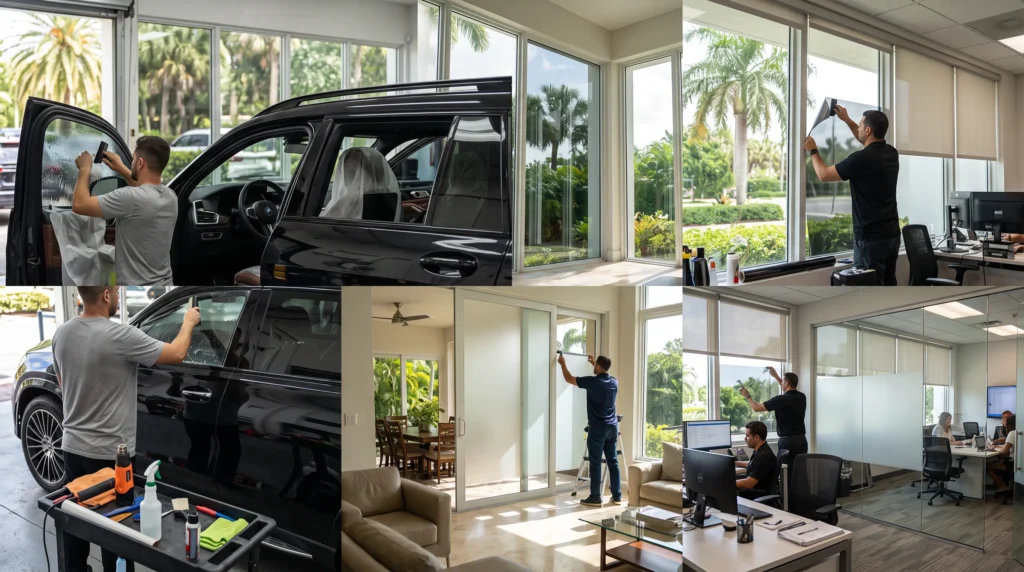
For a residential or commercial building-film project, use an architectural window-film company that can inspect the building glass and recommend film made for that application.
Window Film FAQs
1. What types of Window Film in Broward County are available?
Window film generally falls into automotive and architectural categories. Automotive films are made for vehicle glass. Architectural films include residential, commercial, decorative, privacy, solar-control, and certain safety-film products.
2. Does 305 Auto Customs install home window film?
The current 305 Auto Customs website lists automotive window tint services but does not list residential architectural-film installation. Homeowners should contact an architectural window-film installer for building-glass projects.
3. Does 305 Auto Customs install office window film?
The current service information from 305 Auto Customs focuses on automotive window tint. Office-film projects should be discussed with a commercial architectural-film company familiar with building glass.
4. What automotive window film does 305 Auto Customs install?
305 Auto Customs lists STEK and Geoshield ceramic tint for South Florida vehicles. Available coverage includes two front windows, side and rear glass, full tint, windshield tint, and glare-strip options.
5. What is the legal tint limit for front side windows in Florida?
Florida Statute 316.2953 requires authorized sunscreening material on side windows forward of or adjacent to the driver to allow at least 28% visible light transmission when applied to and tested on the specific vehicle glass. Visible-light reflectance may not exceed 25%.
6. Can home window film make my windows hurricane-proof?
No. The International Window Film Association states that applied film cannot make standard windows hurricane-proof and that window film is not approved hurricane protection for single-family dwelling units under the Florida Building Code.
7. How do I schedule automotive Window Film in Broward County?
Call 305 Auto Customs at (305) 788-9933 or use the contact page. Tell the team your vehicle year, make, model, desired glass coverage, and whether heat, glare, privacy, UV exposure, or appearance is your main concern.
Sources
- Publisher: 305 Auto Customs
- Publication Date: Page does not list a clear publication date
- Used for STEK and Geoshield automotive ceramic tint, package coverage, windshield tint, glare-strip options, heat, glare, UV, and service information.
- Publisher: International Window Film Association
- Publication Date: Current educational resource
- Used for automotive window-film information covering heat, glare, UV exposure, VLT, and state tint-law considerations.
- Publisher: International Window Film Association
- Publication Date: Current educational resource
- Used for home-film information covering heat control, glare, UV exposure, fading, home-office use, and privacy.
- Publisher: International Window Film Association
- Publication Date: Current educational resource
- Used for office-film information covering heat, glare, UV exposure, and commercial glass applications.
- Publisher: International Window Film Association
- Publication Date: Current educational resource
- Used for residential and commercial privacy-film and glare-control information.
- Publisher: International Window Film Association
- Publication Date: Current educational resource
- Used for safety-film information, broken-glass retention, attachment systems, and specialty installation considerations.
- Publisher: International Window Film Association
- Publication Date: 2026
- Used for the statement that applied window film cannot make standard windows hurricane-proof and should not be presented as a replacement for tested hurricane-resistant glazing.
- Publisher: International Window Film Association
- Publication Date: Current educational resource
- Used for questions consumers can ask before choosing film, glass suitability, warranties, and professional installation.
- Publisher: Florida Senate
- Publication Date: 2026 Florida Statutes
- Used for the 28% minimum front-side visible light transmission and 25% maximum visible-light reflectance requirements.
- Florida Statute 316.2954: Windows Behind the Driver
- Publisher: Florida Senate
- Publication Date: 2026 Florida Statutes
- Used for the 15% rear-window VLT requirement for many passenger vehicles, the 6% provision for qualifying multipurpose passenger vehicles, and the 35% reflectance limit.
- Florida Statute 316.2955: Window Sunscreening Material; Compliance Labeling; Tolerances
- Publisher: Florida Senate
- Publication Date: 2026 Florida Statutes
- Used for automotive compliance-label requirements and the plus-or-minus 3% measurement tolerance.
Is Ceramic Coating Worth It for Your Car in Davie, FL? | 305 Auto Customs

Is ceramic coating worth it for your car in Davie, FL? Learn how ceramic coating helps keep paint cleaner, adds gloss, and makes car care easier in South Florida.
Product Brand: Malbor Coatings
5
Pros
- Is ceramic coating worth it for your car in Davie, FL? Learn how ceramic coating helps keep paint cleaner, adds gloss, and makes car care easier in South Florida.
