
Window tinting in Miami Shores, FL can help reduce UV exposure, harsh sunlight, and cabin heat for people who spend time traveling throughout South Florida. Whether you’re heading down Biscayne Boulevard, commuting toward downtown Miami, or running errands around the Village, sunlight reaches your vehicle through more than just the windshield. The front side windows, rear passenger glass, and back window can all contribute to sun exposure during everyday trips.
You may already have dark factory glass on some windows and wonder whether additional film would make a difference.
Or perhaps you’ve heard that ceramic window tint blocks UV rays without needing an extremely dark shade.
Both are worth looking into.
The type of glass matters. The window film matters, too. And Florida has separate rules for the windshield, front side windows, and glass behind the driver.
At 305 Auto Customs, we provide automotive window tinting for customers throughout Miami Shores, FL, Miami, FL, Davie, FL, Broward County, FL, and Miami-Dade County, FL.
Our Miami, FL shop installs STEK and Geoshield ceramic window films for sedans, SUVs, pickup trucks, luxury vehicles, and Teslas.
If you want UV protection across your vehicle’s glass, here’s how to compare the options, understand the legal limits, and decide which windows should receive film.
Table of Contents
- Why UV Protection Matters for Miami Shores Drivers
- How UV Rays Pass Through Automotive Glass
- Front Side Window Tint for UV Protection
- Rear Passenger Window Tint for Families
- Rear Windshield Tint and UV Exposure
- Can You Add UV Film to the Front Windshield?
- Glass Roofs, Sunroofs, and Panoramic Glass
- Clear vs Dark Window Tint for UV Protection
- Why Ceramic Tint Is Worth Considering
- Understanding STEK Window Film Specifications
- Florida’s Legal Window Tint Limits
- How to Select Tint for Every Suitable Window
- Window Tint for Cars, SUVs, Trucks, and Teslas
- Window Tint Installation and Aftercare
- Window Tint Services Near Miami Shores, FL
- Schedule Window Tint with 305 Auto Customs
- Frequently Asked Questions
- Sources
Why Window Tinting in Miami Shores, FL Matters for UV Protection
Miami Shores, FL is located just north of Miami along the Biscayne Bay area.
According to the Greater Miami Shores Chamber of Commerce, the Village provides access to nearby South Florida business areas and transportation routes.
For residents, that means regular trips between neighborhood streets, shopping areas, workplaces, and surrounding communities.
Many of those trips take place in bright sunlight.
You Can Be Exposed to UV Rays Inside a Vehicle
It’s easy to assume that being inside a car provides complete protection from the sun.
The glass offers some protection, but the amount varies.
According to the Skin Cancer Foundation, vehicle windshields generally provide stronger protection against UVA radiation than many conventional side and rear windows.
That difference can matter when you’re sitting next to the same side window during daily travel.
UV Protection Is Different from Heat Rejection
This is an important distinction.
UV protection describes how much ultraviolet radiation a film blocks.
Heat rejection describes how much incoming solar energy the film rejects.
A window film may provide high UV rejection without being the strongest available product for cabin heat control.
Likewise, a dark-looking window isn’t automatically the one with the greatest UV protection.
Why Homeowners and Families Ask About Every Window
Parents may want additional sun protection for children riding in the back seat.
Daily commuters may be concerned about sunlight reaching their arms through front side glass.
Other owners want to help reduce UV exposure on seats, dashboards, and interior trim.
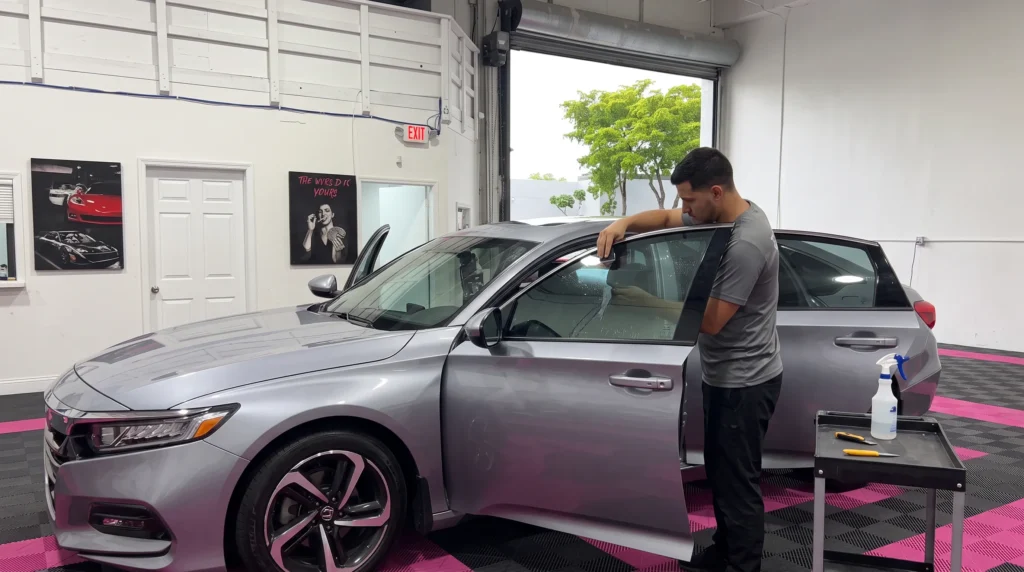
A full tint plan starts by looking at each glass area separately, rather than treating every window as identical.
How UV Rays Pass Through Automotive Glass
Sunlight includes ultraviolet radiation, visible light, and infrared radiation.
Each affects the vehicle in a different way.
What Is the Difference Between UVA and UVB?
UVA and UVB are two types of ultraviolet radiation that reach Earth’s surface.
Both can contribute to skin damage.
UVB plays a major role in sunburn, while UVA also contributes to skin aging and other forms of sun-related damage.
The Skin Cancer Foundation’s July 2026 guidance on car window tint explains that many modern windshields already block nearly all UV radiation, while ordinary side and rear glazing may allow more UVA through.
Actual protection depends on the type and construction of the glass.
Why Windshields Are Different
Automotive windshields generally use laminated glass.
This construction typically contains a plastic interlayer between two pieces of glass.
The interlayer helps the windshield provide substantial UV protection.
A Cancer Council Australia review of tinted vehicle windows explains that laminated windshields tend to provide stronger UVA protection than conventional tempered side glass.
What About Side and Rear Windows?
Many vehicles use tempered glass for side and rear windows.
Those windows commonly block much of the UVB radiation, but their UVA transmission can vary.
Some vehicles use laminated or specially treated side glass that already provides stronger protection.
That means a technician should not assume every car has the same factory UV performance.
If your owner’s manual lists UV protection for the glazing, that information can help when deciding whether additional film is needed.
Front Side Window Tint for UV Protection in Miami Shores, FL
Front side windows are among the most useful areas to consider when planning UV protection.
The driver and front passenger sit close to these windows.
Depending on the time of day, sunlight can reach the face, arms, and other exposed areas.
Why the Driver’s Window Deserves Attention
If you commute along Biscayne Boulevard or travel between Miami Shores, FL and Miami, FL, you may spend a fair amount of time beside the driver-side glass.
The Skin Cancer Foundation describes how repeated exposure through vehicle side windows can contribute to cumulative skin damage.
Suitable UV-blocking window film can reduce that exposure while the glass is closed.
Do Front Windows Need to Be Very Dark?
No.
A darker appearance isn’t required for a film to provide strong UV rejection.
Some ceramic products are available in relatively light shades that still block a high percentage of UV radiation.
That can be useful for motorists who want sun protection without making the side glass unnecessarily dark.
A Two-Front-Window Tint Option
305 Auto Customs advertises a two-front-window ceramic tint package.
This covers the driver and front passenger side windows.
It may be an option for people whose rear glass already has suitable protection or who want to begin with the windows closest to the front occupants.
Florida’s front side window limits must still be followed.
Rear Passenger Window Tint for Family Sun Protection
Rear passenger windows matter, especially when children or other passengers spend time in the back seat.
Sunlight can enter through either side depending on the direction of travel.
Rear Window Film and Passenger Comfort
A suitable ceramic film may provide UV rejection, glare reduction, and solar heat control on approved rear side glass.
This can help make sunny trips more comfortable.
The amount of heat reduction depends on the selected product and existing glazing.
Is Factory Privacy Glass Enough?
Some SUVs and pickup trucks come with darker rear factory glass.
That glass reduces visible light transmission.
But a dark appearance doesn’t automatically tell you how much UVA protection or solar heat rejection it provides.
Check the vehicle manufacturer’s specifications before deciding whether additional film would be useful.
Don’t Forget Smaller Rear Glass Panels
Some vehicles have fixed quarter windows behind the passenger doors.
Others have additional glass near a third row of seating.
These sections can also admit sunlight.
When requesting a full side-and-rear tint installation, ask which small glass panels are included.
Not every package covers every piece of glass automatically.
Rear Windshield Tint: UV Protection Behind the Driver
The rear windshield is another area worth considering when planning automotive tint.
Sunlight can pass through rear glass and reach the cabin, especially during certain times of day.
Why Rear Glass Coverage Matters
The rear windshield may be large, curved, or sloped depending on the vehicle.
Some hatchbacks and sedans have substantial rear glass areas.
A suitable film can help reduce UV transmission and incoming solar energy.
Rear Defroster Lines Need Care
Many rear windshields contain defroster elements.
The installer should work around those components without damaging them.
This is especially relevant when old aftermarket tint needs removal.
Trying to scrape aging film off rear glass without proper methods can create problems.
Does Every Rear Windshield Use the Same Film?
No.
Glass curvature, construction, and existing coatings can affect film selection.
The product must also be suitable for the rear window’s legal tint limit.
For window tinting in Miami Shores, FL, ask the shop to review the vehicle’s rear glass before choosing a shade.
Can You Add UV Protection Film to the Front Windshield in Florida?
This is where product performance and Florida law need to be considered separately.
Some films are marketed as nearly clear UV-protective windshield films.
But a high visible light transmission rating does not automatically make a full windshield application legal.
Florida Has Separate Windshield Restrictions
Under Florida Statutes, Section 316.2952, the general rule restricts sunscreening material attached to windshields.
One permitted application is a transparent strip along the upper portion of the windshield, within the allowed AS/1 region and outside the driver’s direct forward viewing area.
Separate statutory exceptions may apply.
Is Clear Ceramic Windshield Tint Always Legal?
No.
A nearly transparent film may still be classified as sunscreening material under the law.
The fact that a product is marketed for UV protection does not automatically permit full windshield coverage on an ordinary Florida vehicle.
Your Windshield May Already Provide Strong UV Protection
Many laminated windshields already block a very high percentage of UVA and UVB radiation.
The Cancer Council Australia reports that typical laminated windshields provide much stronger UVA blocking than conventional tempered side glass.
If UV reduction is your main goal, ask about your vehicle’s existing windshield before pursuing an additional treatment.
What If You Have a Medical Exemption?
Florida has a process for certain qualifying medical conditions under Section 316.29545.
An eligible person must obtain the applicable exemption certificate through the state process.
A request for additional UV protection alone does not create an exemption.
For ordinary installations, focus first on lawful film coverage for side and rear windows.
Glass Roofs, Sunroofs, and Panoramic Glass: Do They Need UV Tint?
Many newer vehicles have large glass roof panels.
Teslas, SUVs, and luxury vehicles may use panoramic glass that covers a substantial portion of the cabin ceiling.
These areas deserve separate attention.
Some Roof Glass Already Blocks UV Radiation
Certain manufacturers install UV-protective glass as standard equipment.
The amount of protection depends on the vehicle and its glazing construction.
Before adding film, check the owner’s manual or glass manufacturer’s information.
Roof Film Needs a Compatibility Review
Not every window tint product is approved for every sunroof or panoramic roof.
Some films can change how glass absorbs solar energy.
The glass type, coatings, temperature behavior, and manufacturer restrictions all matter.
A film suited to a side window should not automatically be applied to a glass roof.
What About Tesla Glass Roofs?
Tesla vehicles commonly use specialized roof glazing.
305 Auto Customs provides Tesla window tint services for Model 3, Model Y, Model S, and Model X vehicles.
Roof applications need separate film-to-glass compatibility approval.
If suitable film cannot be confirmed, leaving the factory roof glass unchanged may be the safer choice.
A removable sunshade may also be worth considering when additional overhead light control is wanted.
Clear vs Dark Window Tint: Which Offers More UV Protection?
One of the biggest misconceptions about automotive tint is that darker always means better UV protection.
It doesn’t.
Film Darkness Measures Visible Light
The darkness of automotive tint is described by Visible Light Transmission, or VLT.
A high VLT means more visible light passes through.
A low VLT means the window appears darker.
UV rejection is a different performance measurement.
Light Film Can Still Block UV Radiation
The Skin Cancer Foundation explains that UV-blocking window films are available in clear and tinted versions.
The organization’s Seal of Recommendation requires qualifying film products to demonstrate blockage of at least 99% of solar UVA and UVB radiation.
That means a suitable light-colored film can provide strong UV protection.
Window Tint Appearance Comparison
| Film appearance | Visible light effect | UV protection consideration |
|---|---|---|
| Nearly clear | Preserves most visible daylight | Can offer high UV rejection if specified |
| Light tint | Mild change in appearance | UV rejection depends on the film |
| Medium tint | Noticeably darker glass | Not automatically stronger UV protection |
| Dark tint | Greater visible-light reduction | Does not guarantee the highest UV rejection |
| Factory privacy glass | Often dark rear glass | Check the vehicle’s actual UV specifications |
For window tinting in Miami Shores, FL, look at the manufacturer’s UV rejection rating rather than judging protection by appearance.
Why Ceramic Window Tint Is Worth Considering for Miami Shores Drivers
Ceramic film can address several concerns at once.
Depending on the product, it can offer high UV rejection, solar heat control, and glare reduction.
That combination makes it a popular choice for everyday vehicles in South Florida.
UV Rejection and Solar Heat Rejection Are Separate
A ceramic film may reject much of the UV radiation while also managing part of the incoming infrared and total solar energy.
But those measurements describe different properties.
If protecting occupants from UV exposure is your main concern, review the UV rating.
If cabin comfort is also important, compare Total Solar Energy Rejection, or TSER.
Ceramic Tint Doesn’t Have to Be Extremely Dark
Some ceramic products provide useful heat and UV performance at relatively high VLT levels.
This is helpful for motorists who prefer lighter windows or frequently travel after sunset.
The selected shade must still meet Florida’s legal limits after installation.
STEK and Geoshield Ceramic Films at 305 Auto Customs
305 Auto Customs installs STEK and Geoshield ceramic window tint.
These films are intended for automotive glass applications approved by the manufacturer.
Ask our team which product series is currently available and what UV rejection specifications apply to the film you’re considering.
Understanding STEK Window Tint UV Protection and Heat Ratings
STEK publishes technical specifications for its automotive window films.
Its SMART+ nano-ceramic series offers several shades with different levels of visible light transmission.
The UV rejection rating remains high across the listed films.
STEK SMART+ Window Film Comparison
| STEK SMART+ film | Published VLT | Published UV rejection | Published TSER |
|---|---|---|---|
| SMART 70 | 69% | 99% | 44% |
| SMART 45 | 43% | 99% | 46% |
| SMART 35 | 34% | 99% | 49% |
| SMART 20 | 20% | 99% | 53% |
| SMART 15 | 16% | 99% | 54% |
| SMART 05 | 7% | 99% | 59% |
Source: STEK SMART+ Nano-Ceramic Window Tint Specifications.
These are manufacturer-published values measured under specified test conditions. They are not readings from a particular customer’s vehicle. Product availability and legal suitability must be confirmed before installation.
What Does the Table Tell You?
Look at SMART 70 and SMART 35.
Their published VLT values are quite different.
SMART 70 allows considerably more visible light to pass through than SMART 35.
Yet both list 99% UV rejection.
That’s a useful illustration of why UV protection should not be judged by film darkness.
What About Heat Rejection?
The table also shows that TSER changes across the shades.
Darker SMART+ films generally have higher published TSER within this lineup.
But the results depend on the film construction and test method.
A lighter film from another product series may have different performance.
Ask about the actual films available rather than treating one manufacturer table as a universal comparison.
Florida Window Tint Laws: Legal UV Film Coverage for Miami Shores, FL
Florida law matters even when you’re choosing tint mainly for UV protection.
A film’s high UV rejection rating does not exempt it from the state’s visible light transmission or reflectance requirements.
These rules apply statewide, including Miami Shores, FL and surrounding Miami-Dade County, FL communities.
Florida Front Side Window Tint Limits
Under Florida Statutes, Section 316.2953, front side windows must allow at least 28% visible light transmission after the film is applied and tested on the vehicle.
Visible-light reflectance cannot exceed 25%, measured from the nonfilm side.
Florida Rear Window Tint Limits
Under Florida Statutes, Section 316.2954, conventional film on covered rear windows of ordinary passenger cars must generally allow at least 15% VLT.
Qualifying multipurpose passenger vehicles may have a 6% minimum VLT for applicable rear windows.
The relevant rear-film provision also sets a 35% maximum visible-light reflectance.
Vehicle classification affects which rear-window rule applies.
Florida Legal Tint Chart
| Window location | Ordinary passenger car | Qualifying multipurpose passenger vehicle |
|---|---|---|
| Front driver window | Minimum 28% VLT | Minimum 28% VLT |
| Front passenger window | Minimum 28% VLT | Minimum 28% VLT |
| Covered rear side glass | Minimum 15% VLT | Minimum 6% VLT |
| Covered rear windshield | Minimum 15% VLT | Minimum 6% VLT |
| Front side reflectance | Maximum 25% | Maximum 25% |
| Rear-film reflectance | Maximum 35% | Maximum 35% |
| Front windshield | Generally limited to a transparent upper AS/1 strip | Same general rule |
The table summarizes the general rules for conventional sunscreening film. Certain other products and qualifying exemptions are covered separately.
Why Factory Glass Changes the Legal Reading
A film with a published VLT of 35% doesn’t automatically produce a finished window with 35% light transmission.
Factory glass already reduces some visible light.
When film is applied, the combined reading may be lower.
The installer should account for the actual glazing and use appropriate methods to confirm compliance.
Compliance Labels and Measurement Tolerance
Florida Statutes, Section 316.2955 requires a compliance label for covered aftermarket window tint installations.
The label must be affixed inside the vehicle’s left door jamb and identify the film and installer or seller.
The statute provides a measurement tolerance of plus or minus three percentage points.
That tolerance should not be treated as permission to knowingly install film outside the stated legal limits.
How to Plan UV Protection for Every Suitable Vehicle Window
The best way to approach full-vehicle UV protection is to examine each glass area and its purpose.
Not every window needs the same film, and some areas may already have suitable factory protection.
A Practical Window-by-Window Review
| Glass area | What to check | Tint planning consideration |
|---|---|---|
| Front side windows | Existing VLT and UVA protection | Choose compliant ceramic film |
| Rear side windows | Factory privacy glass and legal classification | Review UV rejection and finished VLT |
| Rear windshield | Defrosters, glass shape, existing film | Confirm film and legal suitability |
| Fixed quarter windows | Size and glass construction | Confirm whether included in coverage |
| Front windshield | Existing laminated UV protection | Follow Florida’s windshield restrictions |
| Panoramic roof | Factory UV rating and glass construction | Film only when product compatibility is confirmed |
Start With the Windows That Matter Most
If sunlight reaches you mainly through the driver-side glass, front side tint may be worth discussing first.
If children sit in the rear passenger seats, examine the rear side windows and existing factory protection.
If your vehicle has a large glass roof, check the manufacturer’s UV specifications before requesting additional film.
Does Every Window Need Film?
No.
The goal is to choose lawful, suitable protection where it is needed.
A laminated windshield may already have strong UV protection.
Some roof glass may also have substantial factory UV-blocking properties.
Side glass may benefit from added film, depending on its construction and existing performance.
For window tinting in Miami Shores, FL, a window-by-window discussion is more useful than assuming every glass surface needs the same treatment.
UV Window Tint for Sedans, SUVs, Pickup Trucks, and Teslas
Vehicle design changes how sunlight enters the cabin.
Different glass layouts can call for different film plans.
Sedans and Everyday Commuter Cars
Sedans usually have front and rear side glass, along with a rear windshield.
Some also include smaller fixed windows.
A ceramic tint plan may cover the side and rear glass using shades that meet the applicable laws.
SUVs and Family Vehicles
SUVs often have more glass around the second and third rows.
Some come with dark factory privacy glass.
A film professional should check the existing glass and legal vehicle classification before selecting additional film.
If your main concern is UV exposure for rear passengers, ask about the film’s published UV rejection rather than focusing only on darkness.
Pickup Trucks and Work Vehicles
Pickup trucks may have large side windows and sliding rear glass.
Owners who spend time traveling between work locations may want ceramic tint for glare, UV exposure, and heat control.
The film must work with the glass construction and any moving rear window sections.
Tesla and Electric Vehicles
Tesla vehicles have glass layouts that deserve extra attention.
Some use large panoramic roofs, curved rear glass, and frameless side windows.
305 Auto Customs offers Tesla window tint services for Model 3, Model Y, Model S, and Model X vehicles.
The chosen product must be suitable for each application.
Do not assume a side-window film is approved for a panoramic roof.
How Professional UV Window Tint Installation Works
Professional installation begins with reviewing the vehicle, the glass, and the requested coverage.
A film that looks good on a sample still needs to be installed correctly and meet Florida law.
Step 1: Discuss Your UV Protection Goals
Tell the shop which windows concern you most.
You may want front side coverage, full side-and-rear coverage, or replacement of old film.
Explain whether UV reduction, cabin heat, glare, or privacy is your main concern.
Step 2: Compare Available Ceramic Films
Ask about the STEK and Geoshield films currently available.
Review the published UV rejection, VLT, and TSER ratings.
If you prefer lighter glass, ask which products can provide the UV performance you want while remaining legally compliant.
Step 3: Inspect Existing Glass and Tint
The technician checks factory glass, previous tint, and any visible damage.
Old film may need removal before new film is installed.
Step 4: Clean and Prepare the Windows
The glass is cleaned to remove dirt, oils, and other residue.
Clean preparation helps reduce trapped contamination and supports proper film application.
Step 5: Apply and Finish the Film
The technician shapes and applies film to the approved windows.
Curved rear glass, frameless windows, and other features may need extra attention.
Step 6: Review Curing and Aftercare
Fresh window tint commonly needs time to dry.
Small moisture areas or slight haze may appear during the early curing period.
Follow the instructions for the actual film installed.
Avoid lowering or cleaning newly tinted windows until the installer says it is safe.
Once cleaning is permitted, use a soft cloth and products approved for automotive window film.
UV Window Film Doesn’t Replace Other Sun Protection
The Skin Cancer Foundation recommends combining UV-protective window film with other sun-safety measures.
Tint works only through the glass it covers, and opening a window removes that barrier.
Sunscreen, UV-protective clothing, and other appropriate sun protection still matter when spending time outdoors.
Window Tinting Near Miami Shores, FL and Surrounding Communities
305 Auto Customs provides ceramic automotive window tint from our shop in Miami, FL.
We welcome customers from Miami Shores, FL and nearby neighborhoods who want to discuss UV protection, heat rejection, glare control, and legal tint shades.
Serving Miami Shores, FL
Miami Shores, FL residents can contact our team about ceramic tint for sedans, SUVs, pickups, luxury vehicles, and Teslas.
Whether you’re replacing older film or tinting a new vehicle, our team can discuss suitable options.
Our shop is located in Miami, FL rather than within Miami Shores, FL itself.
Nearby Miami-Dade County, FL Communities
We also welcome customers from:
- Miami, FL
- North Miami, FL
- North Miami Beach, FL
- El Portal, FL
- Biscayne Park, FL
- Miami Gardens, FL
- Aventura, FL
- Hialeah, FL
- Miami Lakes, FL
- Doral, FL
Serving Davie, FL and Broward County, FL
Drivers from surrounding Broward County, FL communities can also contact 305 Auto Customs.
These include:
- Davie, FL
- Hollywood, FL
- Hallandale Beach, FL
- Fort Lauderdale, FL
- Miramar, FL
- Pembroke Pines, FL
- Plantation, FL
- Sunrise, FL
Related Services at 305 Auto Customs
Along with automotive window tint, our shop offers:
These products address different vehicle surfaces.
Window tint helps reduce incoming solar energy and UV exposure through approved glass.
Paint protection film helps guard suitable painted exterior panels against certain road hazards.
Ceramic coating, including our Malbor Coatings services, supports exterior surface care.
Why Choose 305 Auto Customs?
305 Auto Customs works with automotive films and vehicle styling for customers throughout South Florida.
We install STEK and Geoshield ceramic window tint.
Our business is STEK certified and a STEK vendor for applicable automotive protection products.
We also carry warranties on our products and services.
Our team can discuss available film options, suitable glass coverage, and the warranty terms for your selected installation.
Schedule Window Tinting in Miami Shores, FL with 305 Auto Customs
Window tinting in Miami Shores, FL can help vehicle owners reduce UV exposure and manage everyday sunlight.
The front side windows may deserve attention because of how close drivers and passengers sit to the glass.
Rear passenger windows and the back windshield may also benefit from suitable UV-blocking film.
But every glass area needs to be evaluated separately.
Your windshield may already provide strong UV protection. Panoramic roof glass may require a compatibility review. And Florida law controls which aftermarket films can be installed on different windows.
At 305 Auto Customs, we help vehicle owners compare available STEK and Geoshield ceramic tint options while considering visibility, heat rejection, and applicable tint laws.
Whether you’re interested in two front windows or broader side-and-rear glass coverage, contact our team to discuss your vehicle.
Contact 305 Auto Customs
Business Name: 305 Auto Customs
Shop Address: 19597 NE 10th Ave, Bay F, Building 6, Miami, FL 33179
Phone: (305) 788-9933
Business Hours:
- Monday through Friday: 8 AM to 6 PM
- Saturday: 10 AM to 5 PM
- Sunday: 10 AM to 5 PM
Website: 305autocustomsfl.com
Schedule an Appointment: Contact 305 Auto Customs
When contacting us, share your vehicle’s year, make, and model.
Tell us whether you’re interested in front side tint, side-and-rear coverage, or a review of special glass areas.
You can also ask about UV rejection, ceramic film shades, legal limits, and product warranties.
Call (305) 788-9933 or visit our contact page to schedule your window tint appointment.
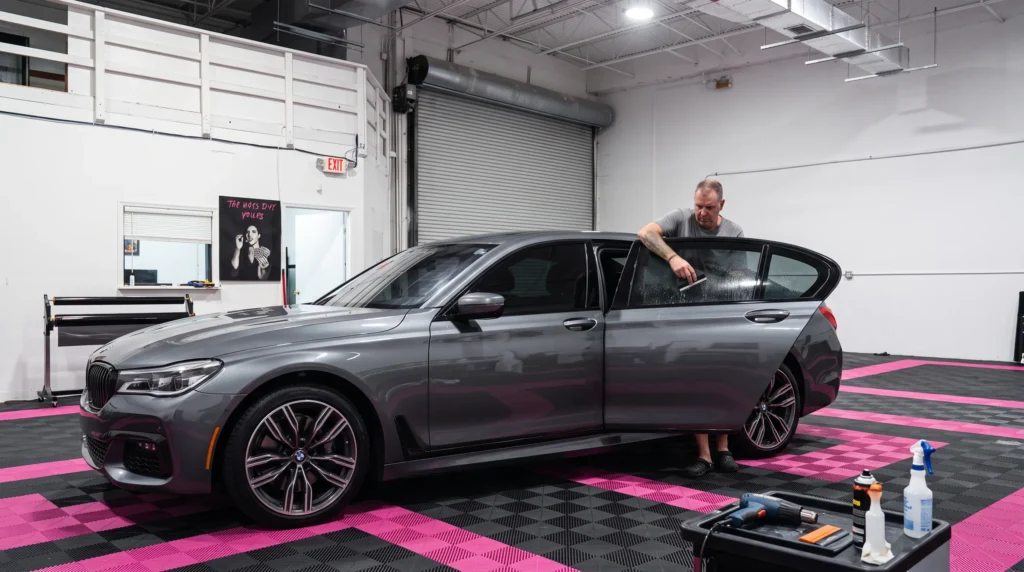
We welcome customers from Miami Shores, FL, Miami, FL, Davie, FL, Broward County, FL, Miami-Dade County, FL, and surrounding South Florida communities.
Frequently Asked Questions About Window Tinting in Miami Shores, FL
1. Does Ceramic Window Tint Block UV Rays?
Yes. Many ceramic automotive films are designed to block a high percentage of ultraviolet radiation. STEK’s SMART+ ceramic series lists 99% UV rejection across its published shades. Actual performance depends on the product and tested glazing. A high UV rejection rating does not necessarily mean the film provides the greatest solar heat rejection.
2. Do I Need Dark Window Tint for UV Protection?
No. Light-colored and nearly clear window films can provide strong UV rejection when designed and tested for that purpose. STEK’s SMART 70 film has a published VLT of 69% and UV rejection of 99%. Its darker SMART+ films also list 99% UV rejection. Choose a shade based on the film specifications, visibility needs, and Florida’s legal limits.
3. What Is the Legal Window Tint Percentage in Florida?
Florida generally requires front side windows to allow at least 28% visible light transmission. Ordinary passenger cars must meet a 15% minimum VLT for covered rear windows, while qualifying multipurpose passenger vehicles may use a 6% minimum under the relevant provision. Reflectance limits also apply. The combined glass-and-film reading must meet the law.
4. Does My Car’s Windshield Already Block UV Radiation?
Most modern laminated windshields provide substantial UVA and UVB protection. Side and rear glass may have different protection levels depending on their construction. Check your vehicle manufacturer’s glass information. Florida also restricts aftermarket windshield sunscreening, so nearly clear full-windshield UV film should not be assumed legal without an applicable exception.
5. Can I Tint Every Window on My Vehicle?
Not necessarily. Side and rear windows can receive suitable, legally compliant film. The windshield has separate restrictions, and panoramic roof glass may require additional film-to-glass compatibility approval. Some factory glass already provides high UV protection. A full tint plan should identify which windows can safely and legally receive the selected product.
6. Does Factory Privacy Glass Offer the Same UV Protection as Ceramic Tint?
Not always. Factory privacy glass primarily changes the amount of visible light passing through the window. Its UV and solar heat rejection properties depend on the vehicle’s glazing. Ceramic film has separate manufacturer performance specifications. If you’re considering tint over privacy glass, check the original glass and final legal light transmission before installation.
7. Where Can I Schedule UV-Blocking Window Tint Near Miami Shores, FL?
Contact 305 Auto Customs at (305) 788-9933 or visit 305autocustomsfl.com/contact-us. Our shop is located at 19597 NE 10th Ave, Bay F, Building 6, Miami, FL 33179. We install STEK and Geoshield ceramic window tint for customers from Miami Shores, FL, Miami, FL, Davie, FL, Broward County, FL, Miami-Dade County, FL, and nearby communities.
Sources
The following sources support the information about UV transmission through automotive glass, window film performance, Florida tint laws, Miami Shores geography, and 305 Auto Customs services.
1. UV Window Film & Tint
- Publisher: The Skin Cancer Foundation
- Publication Date: Last updated December 2024
- URL: UV Window Film & Tint
- Reference: UVA and UVB exposure through vehicle windows, laminated versus tempered glass, UV-blocking film, and additional sun protection.
2. Ask the Expert: Car Window Tint for UV Protection
- Publisher: The Skin Cancer Foundation
- Publication Date: July 2, 2026; updated July 7, 2026
- URL: Car Window Tint for UV Protection
- Reference: UV exposure through automotive glass, film protection, side-window concerns, and medical exemption considerations.
3. Fact Sheet: Tinted Windows
- Publisher: Cancer Council Australia
- Publication Date: Not listed on the referenced page
- URL: Cancer Council Tinted Windows Fact Sheet
- Reference: UVA transmission through laminated and tempered glass, UV protection from films, and the need to follow local tint laws.
4. SMART+ Nano-Ceramic Window Tint
- Publisher: STEK USA
- Publication Date: Not listed on the product page
- URL: STEK SMART+ Window Tint
- Reference: Published UV rejection, visible light transmission, total solar energy rejection, infrared rejection, and warranty information.
5. Florida Statutes, Section 316.2951: Motor Vehicle Windows; Definitions
- Publisher: The Florida Senate
- Publication Date: 2026 statutory edition
- URL: Florida Motor Vehicle Window Definitions
- Reference: Vehicle classifications, sunscreening definitions, visible light transmission, and roof-mounted viewing devices.
6. Florida Statutes, Section 316.2952: Windshields
- Publisher: The Florida Senate
- Publication Date: 2026 statutory edition
- URL: Florida Windshield Restrictions
- Reference: Windshield sunscreening restrictions and the permitted transparent upper AS/1 strip.
7. Florida Statutes, Section 316.2953: Side Windows
- Publisher: The Florida Senate
- Publication Date: 2026 statutory edition
- URL: Florida Front Side Window Tint Law
- Reference: Minimum front side window VLT of 28% and maximum reflectance of 25%.
8. Florida Statutes, Section 316.2954: Windows Behind the Driver
- Publisher: The Florida Senate
- Publication Date: 2026 statutory edition
- URL: Florida Rear Window Tint Law
- Reference: Rear-window light transmission and reflectance limits for passenger cars and qualifying multipurpose passenger vehicles.
9. Florida Statutes, Section 316.29545: Medical Exemptions
- Publisher: The Florida Senate
- Publication Date: 2026 statutory edition
- URL: Florida Window Tint Medical Exemptions
- Reference: Medical exemption certificates for qualifying conditions and other statutory exceptions.
10. Florida Statutes, Section 316.2955: Compliance Labeling
- Publisher: The Florida Senate
- Publication Date: 2026 statutory edition
- URL: Florida Tint Compliance Requirements
- Reference: Aftermarket film labeling and measurement tolerance.
11. Miami Shores Community Information
- Publisher: Greater Miami Shores Chamber of Commerce
- Publication Date: Not listed
- URL: Miami Shores Community Profile
- Reference: Miami Shores location, surrounding areas, and community setting.
12. Automotive Window Tint Services
- Publisher: 305 Auto Customs
- Publication Date: Not listed
- URL: 305 Auto Customs Window Tint
- Reference: STEK and Geoshield ceramic tint, side-and-rear glass coverage, warranty information, and service areas.
13. Tesla Window Tint Services
- Publisher: 305 Auto Customs
- Publication Date: Not listed
- URL: 305 Auto Customs Tesla Window Tint
- Reference: Ceramic tint services for Tesla vehicles and related glass considerations.
14. Contact 305 Auto Customs
- Publisher: 305 Auto Customs
- Publication Date: Not listed
- URL: Contact 305 Auto Customs
- Reference: Shop address, phone number, contact form, and appointment requests.
Is Ceramic Coating Worth It for Your Car in Davie, FL? | 305 Auto Customs
Is ceramic coating worth it for your car in Davie, FL? Learn how ceramic coating helps keep paint cleaner, adds gloss, and makes car care easier in South Florida.
Product Brand: Malbor Coatings
5
Pros
- Is ceramic coating worth it for your car in Davie, FL? Learn how ceramic coating helps keep paint cleaner, adds gloss, and makes car care easier in South Florida.
