

Sliding glass door window tint in Davie, FL can help homeowners reduce afternoon heat, control harsh sunlight, and enjoy their living spaces without keeping the curtains closed all day. Large patio doors bring natural light into a home and provide a clear view of the backyard, pool, or outdoor seating area. But when the South Florida sun shines directly through that glass, the room can become warmer than the rest of the house.
You may have noticed it in your own home.
The living room feels comfortable in the morning, but by midafternoon, sunlight hits the floor, reflects off the television, and makes the seating area uncomfortable. Even with the air conditioning running, the space next to the sliding doors may feel noticeably warmer.
Residential solar window film offers one way to address these problems.
The right film can reduce incoming solar heat, soften glare, limit UV exposure, and provide certain types of daytime privacy. Some films are light enough to preserve much of your outdoor view, while others create a darker or more reflective appearance.
But not every film works with every sliding glass door.
At 305 Auto Customs, we provide window tint services for customers throughout Miami, FL, Davie, FL, Broward County, FL, and Miami-Dade County, FL. Our published window tint services currently focus on automotive applications. Homeowners interested in residential window film should contact our team to confirm whether their sliding glass door project can be accommodated.
If you’re considering window tint for your home, here’s how the different film options work and what to check before scheduling an installation.
Table of Contents
- Why Sliding Glass Door Window Tint Makes Sense in Davie
- How Sliding Glass Doors Let Heat Into Your Home
- How Residential Window Film Controls Heat
- Reducing Glare in Living Rooms and Home Offices
- Choosing Window Film Without Losing Natural Light
- Privacy Window Tint for Sliding Glass Doors
- UV Protection for Furniture and Flooring
- Residential Window Film Types Compared
- Why Existing Glass and Low-E Coatings Matter
- Sliding Glass Door Tint and Home Energy Use
- Professional Sliding Glass Door Tint Installation
- How to Maintain Residential Window Tint
- Home Window Film and Hurricane Protection
- Window Tint for Homes Near Davie, FL
- Contact 305 Auto Customs About Residential Window Film
- Frequently Asked Questions
- Sources
Why Sliding Glass Door Window Tint in Davie, FL Makes Sense
Sliding glass doors are a familiar feature in South Florida homes.
They connect indoor living areas with patios, pool decks, screened porches, and backyards. Large glass panels allow residents to enjoy the outdoor view while keeping the home enclosed and air-conditioned.
That openness is part of their appeal.
The problem starts when strong sunlight reaches the glass for several hours.
The Afternoon Sun Can Change How a Room Feels
Imagine sitting on your couch on a sunny afternoon.
The air conditioning is running, but the sunlight coming through the patio doors is warming the floor and furniture.
You move to another part of the room because the area near the glass feels uncomfortable.
Sliding glass door window tint in Davie, FL can help reduce some of that incoming solar energy when the correct film is installed on compatible glass.
The change depends on the film’s solar performance, the amount of sunlight, and the existing door construction.
Common Reasons Homeowners Consider Window Film
Homeowners often look into residential tint because they want to:
- Reduce heat coming through patio doors
- Cut glare on televisions and computer monitors
- Keep living rooms bright without harsh sunlight
- Help protect flooring and furniture from UV exposure
- Add a degree of daytime privacy
- Reduce the need to close blinds during sunny hours
- Make rooms near large windows more comfortable
- Keep a clearer view of the backyard or pool area
Not every homeowner has the same concern.
A family with west-facing patio doors may be focused on afternoon heat. Someone working from home may care more about screen glare.
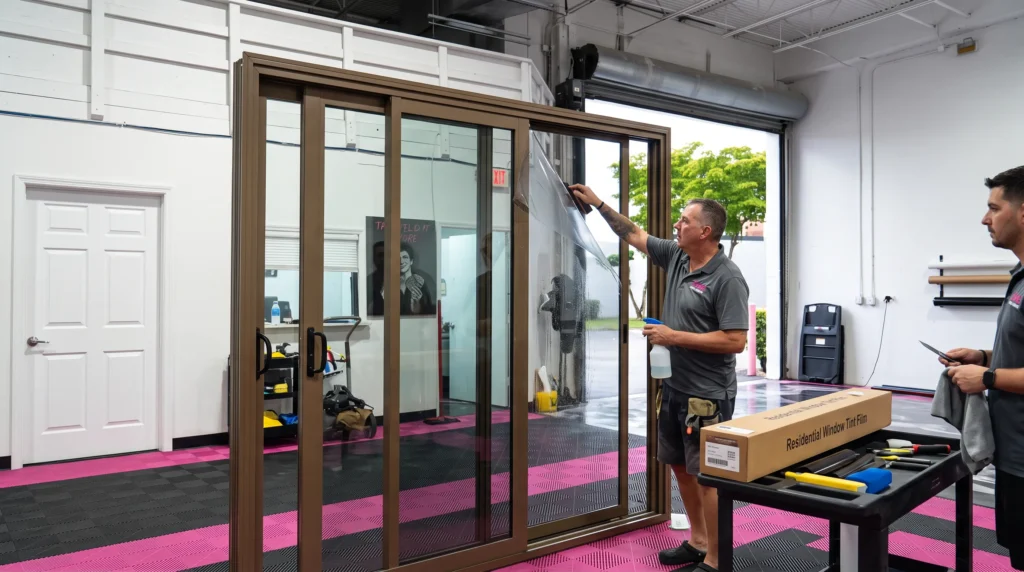
Choosing a film starts with identifying what you want to change.
How Sliding Glass Doors Let Heat Into Your Home
Sunlight carries energy.
When that energy passes through a glass door and reaches surfaces inside the home, it can contribute to indoor heat buildup.
Floors, furniture, and other surfaces can absorb solar energy and become warmer.
A large area of exposed glass can make this more noticeable.
Why Some Sliding Doors Feel Hotter Than Others
The direction the doors face can affect how much sunlight enters a room.
The U.S. Department of Energy’s guidance on daylighting explains that east-facing and west-facing windows can be more challenging when managing unwanted glare and solar heat.
A room that receives direct afternoon sunlight may feel different from one shaded by trees or a covered patio.
Other factors include:
- Size of the glass panels
- Direction of the doors
- Existing low-E coatings
- Single-pane or insulated glass construction
- Outdoor shading
- Window coverings
- Air leakage around the frame
- Time of day
This is why two homes in Davie, FL can have very different experiences with similar-looking sliding doors.
Window Tint Doesn’t Fix Every Source of Heat
Solar-control film works on the energy passing through treated glass.
It does not repair damaged weatherstripping, fix air leaks around door frames, or replace missing insulation.
If warm outdoor air enters around the sliding door, the seals and frame may need attention.
A good home comfort plan should account for both sunlight and air leakage.
How Sliding Glass Door Window Tint Helps Control Solar Heat
Residential window film is designed to change how solar energy passes through glass.
Some products reflect part of that energy.
Others absorb a portion and release it through the glazing system.
The exact performance depends on the film and glass combination.
Understanding Solar Heat Gain Coefficient
One measurement worth knowing is the Solar Heat Gain Coefficient, or SHGC.
The National Fenestration Rating Council’s window film guide explains that SHGC describes how much solar heat passes through a window system.
A lower SHGC means less solar heat is transmitted.
For a home in a warm climate such as Davie, FL, reducing unwanted solar heat gain can help improve comfort near sun-exposed doors.
The film’s published performance should be considered alongside the type of glass already installed.
Darker Film Doesn’t Always Mean Better Heat Control
This surprises some homeowners.
A dark-looking film isn’t automatically the best option for reducing solar heat.
Modern architectural films can offer solar-control properties while allowing a relatively high amount of visible light into the room.
For instance, 3M’s Ceramic Architectural Window Film is offered in different light-transmission options designed to manage heat while maintaining varying levels of daylight.
These products are examples of architectural film technology, not a claim that 305 Auto Customs currently installs that particular film.
The goal is to compare verified solar performance rather than choosing by darkness alone.
Sliding Glass Door Window Tint for Living Room Glare Control
Heat isn’t the only reason people consider residential window film.
Glare can make a room difficult to enjoy, especially when sunlight reflects across screens or bright surfaces.
Watching Television Without Closing Every Curtain
Picture a living room where the television faces the patio doors.
When the afternoon sun reaches the glass, reflections appear across the screen.
You may find yourself closing the blinds even though you would rather look outside.
Glare-control film can reduce the amount of visible light passing through the glass.
That can make television viewing more comfortable in some lighting conditions.
The International Window Film Association identifies glare reduction as one of the common uses of residential film.
Glare Control for Home Offices
Some Davie, FL homeowners use a dining area or living room corner as a workspace.
If a sliding glass door faces the desk, direct sunlight can make computer screens harder to see.
A suitable film may help soften that incoming brightness.
Before choosing a dark product, think about how much daylight you still want in the room.
A film that reduces glare but makes the room too dark may not fit your needs.
Choosing Sliding Glass Door Window Tint Without Losing Natural Light
One reason homeowners like sliding doors is the open view.
You can see the patio, watch your kids in the backyard, or enjoy the landscaping without stepping outside.
A window film should support that experience rather than work against it.
What Is Visible Light Transmission?
Visible Light Transmission, or VLT, measures the percentage of visible light that passes through glass or film.
A higher VLT means more visible light enters the room.
A lower VLT means less visible light passes through.
The NFRC Consumer Guide identifies visible transmittance as a useful measurement when comparing window film products.
How Different Film Styles Affect a Room
| Film appearance | Daylight effect | Common goal |
|---|---|---|
| Clear or nearly clear | Preserves much of the existing light | Solar control with minimal visual change |
| Light neutral tint | Slightly darkens incoming daylight | Heat and mild glare control |
| Medium solar tint | More noticeable light reduction | Stronger glare control |
| Reflective film | Creates a more reflective glass appearance | Solar control and daytime privacy |
| Frosted film | Obscures clear views through treated areas | Visual privacy and decoration |
Actual results depend on the film’s specifications and existing glass.
Think About the View Before Selecting the Film
If your patio overlooks a pool or garden, you may prefer a lighter product.
If your sliding doors face a bright paved area, you may be more comfortable with greater glare reduction.
Ask to see actual film samples and compare them under daylight.
A small sample can help you understand the change in appearance before committing to a larger installation.
Privacy Window Tint for Sliding Glass Doors in Davie, FL
Privacy is another concern for homes with large glass doors.
A sliding door facing a neighboring property, sidewalk, or outdoor entertaining area may leave the interior visible.
Certain window films can change how easily people see through the glass.
Reflective Film for Daytime Privacy
Reflective window film can make glass appear more mirror-like under suitable lighting conditions.
When the outside is much brighter than the inside, it may be harder for people outdoors to see into the home.
This can be useful for homeowners who want daytime privacy without closing curtains.
Does Privacy Film Work at Night?
Not always.
This is one of the biggest misunderstandings about reflective window tint.
At night, interior lighting can make the inside of the house brighter than the area outdoors.
When that happens, people outside may be able to see into the room.
3M’s residential solar privacy film guidance states that its reflective privacy film provides daytime privacy rather than around-the-clock privacy.
What If You Need Privacy After Dark?
If nighttime privacy matters, consider a different treatment.
Options may include:
- Curtains
- Roller shades
- Blinds
- Frosted glass film
- Decorative obscuring film
Frosted film can block clear views through selected portions of the glass during both daytime and nighttime conditions.
The trade-off is that you also lose some of the clear outdoor view.
For sliding glass door window tint in Davie, FL, tell the film professional whether your concern is daytime visibility, nighttime privacy, or both.
UV Protection for Floors, Furniture, and Interior Finishes
Strong sunlight can affect more than the room temperature.
Furniture, flooring, rugs, artwork, and fabrics may change appearance after long periods of exposure.
UV radiation is one factor in fading, along with visible light, heat, and the characteristics of the material.
How Residential Window Film Reduces UV Exposure
Many architectural window films are made to reduce the amount of ultraviolet radiation passing through treated glass.
The International Window Film Association’s FAQ notes that some films can block up to 99% of UV radiation.
The actual performance depends on the product.
Can Window Tint Stop Furniture From Fading?
No film can promise that furniture or flooring will never fade.
UV reduction can help, but visible light and heat also contribute to the aging of certain materials.
If your sliding doors allow sunlight to fall directly on wood flooring, upholstery, or rugs, a suitable solar-control film may be worth considering.
For homeowners with expensive furnishings or sun-exposed interior finishes, ask to review the film’s published UV rejection information.
Residential Sliding Glass Door Window Film Types Compared
Choosing sliding glass door window tint in Davie, FL involves more than picking a dark shade.
Several types of architectural films are available, each with a different purpose.
Solar-Control Window Film
Solar-control film is made to reduce incoming solar energy.
It may be clear, lightly tinted, neutral, or reflective.
The best choice depends on the heat reduction you want and how much natural light you prefer.
Ceramic Architectural Window Film
Some ceramic architectural films are designed to manage solar heat while maintaining a relatively neutral appearance.
They can be useful for homeowners who want solar-control performance without heavily mirrored glass.
Always compare product data rather than assuming every ceramic film performs the same way.
Reflective Residential Film
Reflective film changes how the glass looks from outside.
Some versions offer a stronger mirror effect during daylight.
That appearance may not fit every home, homeowners association, or architectural style.
If you live in a community with exterior appearance rules, check those requirements before installing a reflective film.
Frosted and Decorative Window Film
Frosted film serves a different purpose.
Instead of focusing only on solar heat, it makes the glass harder to see through.
Homeowners may choose it for lower sections of sliding doors, entry areas, or spaces where privacy matters more than an uninterrupted outdoor view.
Decorative film should not be assumed to provide strong solar heat control unless the product specifications support that use.
Why Existing Sliding Glass Door Construction Matters Before Tinting
Here’s where the project becomes more technical.
Not all residential glass is the same.
A sliding door may contain single-pane glass, insulated double-pane glass, tempered glass, laminated glass, or glass with a factory-applied low-E coating.
Those differences affect film selection.
Low-E Glass and Residential Tint Compatibility
Low-E glass has a special coating designed to control heat transfer.
The U.S. Department of Energy explains how these coatings change the way windows manage heat and sunlight.
A low-E coating may already provide some solar-control performance.
Adding film may change how heat is absorbed and released.
The film professional should confirm whether the proposed product is compatible with the exact low-E glass construction.
Double-Pane Sliding Glass Doors
Insulated sliding doors commonly use two panes separated by a sealed air or gas space.
Film can change the temperature behavior of the glass.
The NFRC warns that window film may create thermal-stress concerns or affect insulated glazing seals in some situations.
That doesn’t mean every double-pane door cannot be tinted.
It means the installer needs to follow the film manufacturer’s glass compatibility guidance.
Can Window Film Cause Glass Breakage?
Improper film selection can contribute to thermal stress.
Thermal stress occurs when different parts of a glass pane experience uneven temperatures.
The International Window Film Association recommends using the manufacturer’s film-to-glass guidelines when determining whether a product is appropriate.
Before installation, ask the professional to review:
- Glass type and thickness
- Existing low-E coatings
- Single-pane or insulated construction
- Tempered or laminated glass
- Existing damage
- Sun exposure
- Partial shading
- Door manufacturer warranty conditions
Do not install automotive tint on home sliding glass doors unless that specific product is approved for the architectural application.
Can Sliding Glass Door Window Tint Help with Home Energy Use?
Residential solar film can reduce some unwanted solar heat entering through treated glass.
In a warm climate, that can help limit a source of cooling demand.
The amount of change depends on how much sunlight reaches the glass and how the rest of the house performs.
Solar Heat Reduction and Air Conditioning
The My Florida Home Energy window guide explains that windows play a role in home heat gain.
It also recommends shading, weatherstripping, and selecting glass with suitable solar performance for Florida conditions.
Solar-control film is one option for existing glazing.
It works best when selected for the particular room and window system.
Window Film Isn’t a Substitute for Door Repairs
If your sliding doors have worn weatherstripping or gaps around the frame, warm outdoor air can still enter the home.
Film doesn’t correct those problems.
Likewise, a door that is difficult to slide may need track or roller maintenance.
For sliding glass door window tint in Davie, FL, separate the sunlight problem from any mechanical or sealing concerns.
Why Results Differ Between Homes
One house may have large west-facing patio doors with almost no outdoor shade.
Another may have deep roof overhangs and mature trees that block much of the direct sunlight.
The first home may experience more noticeable solar heat reduction than the second.
No film should come with a blanket promise about how much the homeowner’s air conditioning use will change.
Ask for performance information based on the actual film and glazing system.
How Professional Sliding Glass Door Window Tint Installation Works
Residential film installation should begin with a review of the existing doors.
Sliding glass panels are large, and their size can make cleaning, measuring, and film handling more demanding.
A professional should also account for the tracks, handles, door frames, and moving panels.
Step 1: Discuss the Homeowner’s Goals
Start by describing the problem.
Does the living room become too warm in the afternoon?
Is glare making it hard to watch television?
Do you want privacy from neighboring homes?
The answers help narrow down suitable film types.
Step 2: Inspect the Glass
The film professional reviews the sliding door’s construction and existing condition.
The selected product must be compatible with the glass.
Any cracks, chips, failed insulated-glass seals, or other concerns should be addressed before installation.
Step 3: Measure the Glass Panels
Each panel should be measured carefully.
Sliding doors may have overlapping glass sections, handles, locks, and frames that affect access.
The film should be fitted so it does not interfere with normal door operation.
Step 4: Prepare the Glass
Dust, oils, adhesive residue, and other contamination must be removed.
The surface should be cleaned according to the film manufacturer’s instructions.
Some products use a liquid application solution during installation.
Step 5: Apply the Film
The film is placed onto the approved glass surface.
The installer positions it, removes excess application solution, and finishes the edges according to the product instructions.
Matching the appearance across adjoining door panels is part of a good installation plan.
Step 6: Review Curing and Aftercare
After installation, some moisture or temporary haziness may remain while the film dries.
The curing period varies with the product, temperature, and environmental conditions.
Homeowners should follow the manufacturer’s directions about when the film can be cleaned and how to inspect the finished surface.
How to Maintain Window Tint on Sliding Glass Doors
Residential film doesn’t require a complicated cleaning routine.
Still, the wrong tools or cleaning products can scratch the surface or damage an edge.
Let the Film Cure
Don’t begin scrubbing freshly installed film.
Ask the installer when normal cleaning can begin.
The drying period depends on the film and conditions inside the home.
Use Nonabrasive Cleaning Materials
The International Window Film Association recommends soft cloths, clean synthetic sponges, and nonabrasive glass cleaners for filmed windows.
Use a soft squeegee or cloth when drying.
Avoid rough pads, abrasive powders, and scraping tools on the filmed surface.
Watch Sliding Door Edges
Sliding doors open and close frequently.
If a film edge begins peeling or rubbing against a seal, contact the installer.
Do not pull the film away from the glass.
Keep the Door Tracks Clean
Sand, dirt, and debris in sliding door tracks can affect how smoothly the panels move.
Track cleaning is separate from window film care, but it remains part of keeping the doors in good working condition.
Film shouldn’t interfere with locks, rollers, or other moving parts.
Is Sliding Glass Door Window Tint a Substitute for Hurricane Protection?
No.
This distinction matters for homeowners in Broward County, FL and Miami-Dade County, FL.
Ordinary solar-control window film is not a replacement for impact-rated sliding doors or approved storm protection.
Solar Film and Safety Film Have Different Purposes
Solar film is usually selected to manage sunlight, heat, glare, and UV exposure.
Certain security films are made to help hold broken glass together under specified conditions.
Those products have different construction and installation requirements.
Even a security film should not be assumed to make an existing sliding door hurricane-rated.
The 3M residential window film FAQ explicitly states that its Sun Control films are not hurricane protection products.
Check Your Existing Storm Protection
If your home needs hurricane protection, use products and systems approved for that purpose.
The applicable protection may involve impact-rated glazing, approved shutters, or another code-compliant system.
Adding ordinary window film does not replace those protections.
For sliding glass door window tint in Davie, FL, keep the solar comfort project separate from storm protection decisions.
Sliding Glass Door Window Tint Near Davie, FL and Surrounding Communities
Homeowners throughout South Florida face similar concerns with large glass doors.
The amount of sunlight may vary, but heat buildup, glare, fading, and privacy are common reasons for researching residential film.
Sliding Glass Door Tint in Davie, FL
Homes in Davie, FL may have sliding doors leading to patios, covered seating areas, and backyard pools.
When direct sunlight reaches the doors, a room may feel warmer or brighter than expected.
A suitable residential film can help manage that incoming light and solar heat.
You can also read our related guide on home window tinting in Davie, FL for more information about heat, glare, and UV control.
Home Window Film Considerations Across Broward County, FL
Homeowners in nearby communities may also be researching residential window tint.
These areas include:
- Davie, FL
- Plantation, FL
- Cooper City, FL
- Weston, FL
- Sunrise, FL
- Hollywood, FL
- Pembroke Pines, FL
- Miramar, FL
- Fort Lauderdale, FL
Whether a home has two sliding doors or several large glass panels, material selection should begin with the existing glazing and sunlight exposure.
Residential Glass Questions in Miami, FL and Miami-Dade County, FL
Similar concerns apply to homes throughout Miami, FL and Miami-Dade County, FL.
A sliding door facing a bright patio may need a different film from a door shaded by a large roof overhang.
Privacy needs can also vary depending on nearby buildings and outdoor lighting.
The right product should match the home rather than rely on a single film choice for every property.
Ask 305 Auto Customs About Sliding Glass Door Window Tint in Davie, FL
Sliding glass door window tint in Davie, FL may be worth considering if your living room feels too hot, sunlight causes screen glare, or you want better daytime privacy.
The film you choose matters.
Some products focus on solar heat control while keeping rooms bright. Others reduce visible light or change the appearance of the glass.
Before installing anything, the door’s construction and film compatibility need to be reviewed.
At 305 Auto Customs, our published window tint services focus on automotive glass, including STEK and Geoshield ceramic tint.
If you’re interested in home sliding glass door tint, contact our team first to confirm whether residential film consultation or installation is currently available.
Contact 305 Auto Customs
Business Name: 305 Auto Customs
Shop Address: 19597 NE 10th Ave, Bay F, Building 6, Miami, FL 33179
Phone: (305) 788-9933
Business Hours:
- Monday through Friday: 8 AM to 6 PM
- Saturday: 10 AM to 5 PM
- Sunday: 10 AM to 5 PM
Website: 305autocustomsfl.com
Contact Form: Schedule or Request Service Information
When contacting us, explain that you’re asking about residential sliding glass door tint.
It helps to share:
- Your property’s location
- Approximate sliding door measurements
- Photos of the glass and frames
- Whether the glass is single-pane or insulated, if known
- The direction the doors face
- Whether heat, glare, UV control, or privacy matters most
Our team can confirm whether the requested residential service is available before you make an appointment.
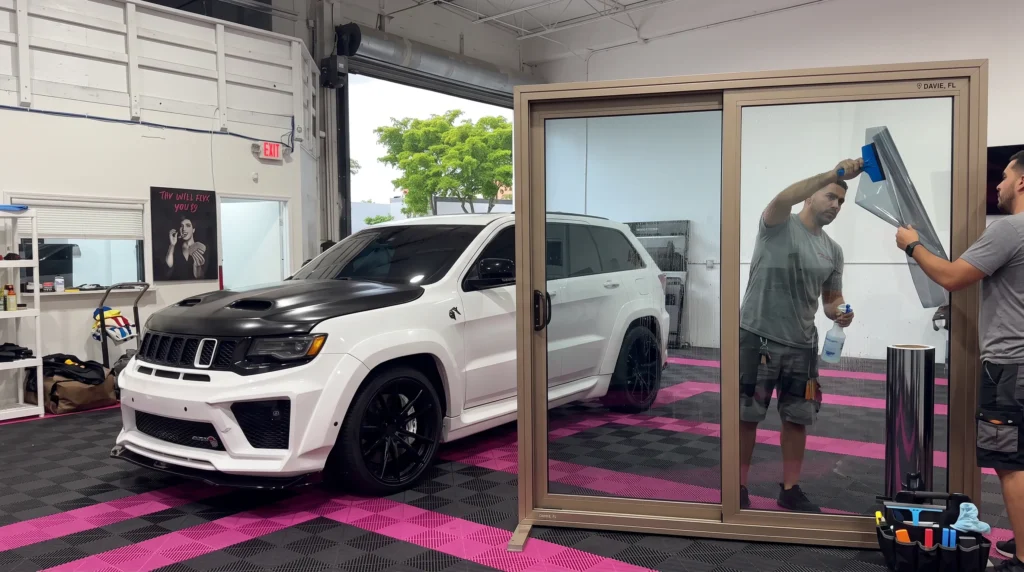
Call (305) 788-9933 or visit our contact page to ask about home window film availability.
Frequently Asked Questions About Sliding Glass Door Window Tint in Davie, FL
1. Can Sliding Glass Door Window Tint Reduce Heat in My Davie, FL Home?
Yes. A suitable solar-control window film can reduce some of the solar heat entering through compatible sliding glass doors. The amount of reduction depends on the film, existing glass, window direction, and amount of direct sunlight. Film cannot fix air leaks or guarantee a particular indoor temperature, but it can help manage solar heat entering the room.
2. Will Sliding Glass Door Tint Make My Living Room Too Dark?
Not necessarily. Some residential films are designed to reduce solar heat while allowing a relatively high amount of visible light through the glass. Other films create a darker or more reflective appearance. Compare visible light transmission and solar heat performance before choosing. A lighter solar film may suit homeowners who want to preserve their outdoor view.
3. Does Privacy Window Film Work at Night?
Reflective privacy film typically works best when the outside is brighter than the inside. At night, interior lighting may allow people outdoors to see into the home. If you need privacy after sunset, curtains, blinds, or frosted film may be more appropriate. Discuss both daytime and nighttime conditions before selecting the film.
4. Can You Tint Double-Pane or Impact-Resistant Sliding Glass Doors?
Some insulated and laminated glass doors can receive compatible architectural film, but approval depends on the glass construction and selected product. Existing low-E coatings, glass thickness, thermal stress, and door manufacturer warranties all matter. A film professional should review the exact glazing before installation. Do not assume a product suitable for ordinary single-pane glass is suitable for every impact-rated or insulated door.
5. Can Residential Window Film Help Protect Furniture and Wood Flooring?
Many residential films reduce ultraviolet radiation passing through treated glass. This can help limit one cause of furniture, fabric, and flooring fading. No film prevents every form of fading because visible light, heat, materials, and exposure time also affect the result. Ask for the manufacturer’s UV rejection specifications when comparing products.
6. Does Sliding Glass Door Window Tint Provide Hurricane Protection?
Ordinary solar-control window film does not make sliding glass doors hurricane-rated. Some separate safety films are designed to help retain broken glass under certain conditions, but they must not be treated as replacements for approved impact-resistant doors or storm shutters. Homeowners should rely on code-compliant systems for hurricane protection.
7. How Do I Ask About Sliding Glass Door Window Tint Near Davie, FL?
Contact 305 Auto Customs at (305) 788-9933 or visit 305autocustomsfl.com/contact-us. Our shop is located in Miami, FL, and our currently published window tint service focuses on vehicles. Tell the team you are interested in residential sliding glass door film and ask whether the service is available for your home before scheduling an appointment.
Sources
The following resources support the information about residential window film, heat control, glare reduction, UV protection, glass compatibility, film maintenance, and service availability.
1. Window Film
- Publisher: National Fenestration Rating Council, Consumer Guide to Windows
- Publication Date: Not listed
- URL: NFRC Window Film Guide
- Reference: Solar Heat Gain Coefficient, visible light transmission, solar heat control, thermal stress, glass seal considerations, and film compatibility.
2. Window Film and Your Home
- Publisher: International Window Film Association
- Publication Date: Not listed
- URL: IWFA Residential Window Film
- Reference: Residential solar heat reduction, glare control, UV exposure, daytime privacy, and home comfort.
3. Frequently Asked Questions About Window Film
- Publisher: International Window Film Association
- Publication Date: Not listed
- URL: IWFA Window Film FAQ
- Reference: Film compatibility with low-E glass, thermal stress, UV rejection, cleaning methods, and product durability.
4. Window Types and Technologies
- Publisher: U.S. Department of Energy
- Publication Date: Not listed
- URL: DOE Window Types and Technologies
- Reference: Low-E coatings, insulated glass, heat transfer, and solar-control window technologies.
5. Natural Light and Daylighting
- Publisher: U.S. Department of Energy, Building Science Education
- Publication Date: Not listed
- URL: Natural Light and Daylighting
- Reference: How window orientation, shading, and sunlight affect interior glare and heat.
6. Windows and Skylights
- Publisher: My Florida Home Energy, based on University of Florida IFAS Extension materials
- Publication Date: Not listed
- URL: Florida Home Energy Window Guide
- Reference: Florida window performance, shading, solar heat gain, weatherstripping, and existing window considerations.
7. Sun Control Window Film Ceramic Architectural Series
- Publisher: 3M
- Publication Date: Not listed
- URL: 3M Ceramic Architectural Film
- Reference: Residential ceramic film construction, visible light choices, solar heat control, and UV rejection. Included as an architectural product example, not as a confirmed 305 Auto Customs product.
8. Sun Control Window Films for Residential Glass
- Publisher: 3M
- Publication Date: Not listed
- URL: 3M Residential Sun Control Film
- Reference: Solar film performance, daytime privacy limitations, residential glass compatibility, and the distinction between solar film and hurricane protection.
9. Home Window Tinting in Davie, FL: Heat, Glare & UV Control
- Publisher: 305 Auto Customs
- Publication Date: Not listed
- URL: Home Window Tinting in Davie, FL
- Reference: Related homeowner questions, solar heat, glare, UV reduction, residential film considerations, and confirmation of residential service availability.
10. Window Tint Services
- Publisher: 305 Auto Customs
- Publication Date: Not listed
- URL: 305 Auto Customs Window Tint
- Reference: Published automotive window tint services, business location, product brands, and contact information.
11. Contact 305 Auto Customs
- Publisher: 305 Auto Customs
- Publication Date: Not listed
- URL: Contact 305 Auto Customs
- Reference: Business address, phone number, contact form, and service inquiries.
Is Ceramic Coating Worth It for Your Car in Davie, FL? | 305 Auto Customs

Is ceramic coating worth it for your car in Davie, FL? Learn how ceramic coating helps keep paint cleaner, adds gloss, and makes car care easier in South Florida.
Product Brand: Malbor Coatings
5
Pros
- Is ceramic coating worth it for your car in Davie, FL? Learn how ceramic coating helps keep paint cleaner, adds gloss, and makes car care easier in South Florida.
