

Auto Window Tinting in Fort Lauderdale can make a daily commute more comfortable by reducing glare, cutting solar heat, adding privacy, and changing the appearance of the glass. Florida drivers also need to pay attention to state tint rules because the legal limit is based on the finished glass-and-film combination, not simply the percentage printed on a box of window film.
Florida law sets different visible-light-transmission limits for windows beside the driver and windows behind the driver. The rules also change for some multipurpose passenger vehicles, and the windshield follows a separate rule.
305 Auto Customs installs Window Tint using STEK and GeoShield ceramic film for drivers throughout Fort Lauderdale, FL, Davie, FL, Broward County, FL, Miami, FL, and Miami-Dade County, FL.
If you are planning Auto Window Tinting in Fort Lauderdale, knowing the legal numbers before choosing a film can help you make a better choice for your car, truck, SUV, or work vehicle.
Table of Contents
- Florida Window Tint Limits at a Glance
- What Does VLT Mean?
- Florida Front Side Window Tint Limits
- Florida Rear Window Tint Limits
- Passenger Cars vs Multipurpose Passenger Vehicles
- Florida Windshield Tint Rules
- Florida Reflectance Limits
- Why the Final Glass Reading Matters
- Florida Tint Labels and Measurement Tolerance
- How Florida Highway Patrol Checks Tint
- Medical Window Tint Exemptions in Florida
- Ceramic Tint vs Dark Tint
- STEK Ceramic Window Tint
- Why Fort Lauderdale Drivers Choose Window Tint
- Choosing Tint for a Daily Driver
- Tint for Trucks and SUVs
- Tint for Work and Fleet Vehicles
- Replacing Old Window Tint
- Auto Window Tinting Near Fort Lauderdale, FL
- Schedule Window Tint With 305 Auto Customs
- Auto Window Tinting FAQs
- Sources
Florida Window Tint Limits at a Glance
Auto Window Tinting in Fort Lauderdale must follow the Florida rules that apply to the specific window and vehicle type.
Under the current Florida Statutes posted by the Florida Legislature:
| Window Area | Florida Requirement |
|---|---|
| Front side windows beside the driver | At least 28% visible light transmission |
| Front side window visible-light reflectance | No more than 25% |
| Rear windows on most passenger vehicles | At least 15% visible light transmission |
| Rear windows on qualifying multipurpose passenger vehicles | At least 6% visible light transmission |
| Rear-window visible-light reflectance | No more than 35% |
| Windshield | Transparent strip permitted at the top without entering the driver’s direct viewing area defined by the AS/1 portion |
Florida law also gives percentage measurements a tolerance of plus or minus 3 percentage points.
These figures are based on the film and glass tested together on the vehicle.
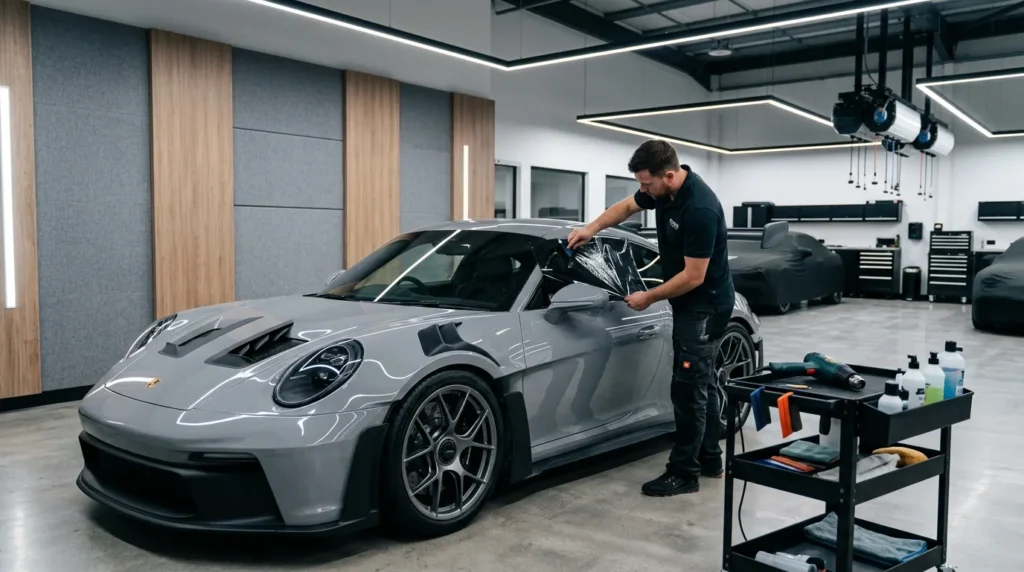
That distinction matters when choosing window film.
What Does VLT Mean?
VLT means visible light transmission.
The percentage tells you how much visible light passes through the tested window system.
A higher VLT percentage allows more visible light through.
A lower VLT percentage makes the glass appear darker.
A 70% VLT film is much lighter than a 20% film.
Auto Window Tinting in Fort Lauderdale should not be chosen by appearance alone because Florida law measures the completed window rather than looking only at the film rating.
Factory automotive glass may already reduce some light transmission before aftermarket film is installed.
Once film is added, the combined reading can be lower than the film’s advertised number.
Florida Front Side Window Tint Limits
Florida Statute 316.2953 covers side windows forward of or adjacent to the driver’s seat.
The statute allows sunscreening material when the finished window has:
- At least 28% visible light transmission
- No more than 25% visible-light reflectance
These limits apply to the window with the film installed and tested on that vehicle.
For most drivers considering Auto Window Tinting in Fort Lauderdale, this means the driver and front-passenger side windows should be selected with the finished reading in mind.
A film labeled 30% does not automatically guarantee a finished 30% reading because the factory glass contributes to the total.
Florida Rear Window Tint Limits
Florida Statute 316.2954 covers windows behind the driver.
For most passenger vehicles, film on these windows must produce:
- At least 15% visible light transmission
- No more than 35% visible-light reflectance
Florida allows a darker rear-window limit for qualifying multipurpose passenger vehicles.
Those vehicles may use rear sunscreening material that produces at least 6% visible light transmission, while keeping visible-light reflectance at no more than 35%.
This is one reason a sedan and an SUV may not have the same legal rear tint setup.
Passenger Cars vs Multipurpose Passenger Vehicles
Vehicle type matters when planning Auto Window Tinting in Fort Lauderdale.
Florida’s rear-window statute gives qualifying multipurpose passenger vehicles a lower rear VLT threshold than standard passenger cars.
That can affect vehicles such as certain:
- SUVs
- Vans
- Utility vehicles
Do not assume a darker rear tint seen on an SUV is automatically legal on a sedan.
The front side-window rule remains separate.
If you are not sure how your vehicle is classified, discuss it before film is installed.
Florida Windshield Tint Rules
The windshield follows its own rule.
Florida Statute 316.2952 allows a transparent sunscreening strip along the top of the windshield as long as the material does not enter the driver’s direct forward viewing area described by the federal AS/1 portion of the windshield.
Many windshields have an AS/1 marking near the upper edge.
That marking helps identify the area associated with the legal top strip.
Drivers considering Auto Window Tinting in Fort Lauderdale should not assume the same film used on the side windows can simply cover the complete windshield under the standard rule.
Medical exemptions can create separate circumstances, which are covered later in this guide.
Florida Reflectance Limits
Tint darkness is only part of Florida law.
Reflectance also matters.
Florida limits the amount of visible light reflected by treated windows.
For front side windows, Florida Statute 316.2953 sets the maximum visible-light reflectance at 25%.
For windows behind the driver, Florida Statute 316.2954 sets the maximum at 35%.
Highly reflective or mirror-like film can create a legal problem even when the VLT reading falls within another portion of the statute.
When choosing Auto Window Tinting in Fort Lauderdale, ask about both VLT and reflectance.
Why the Final Glass Reading Matters
A common mistake is treating a film’s advertised VLT as the final reading.
The legal measurement is based on the finished glass and film together.
Suppose the factory window already reduces a small amount of visible light.
Adding film reduces the combined transmission further.
This is why the Florida statute refers to sunscreening material when applied to and tested on the glass of the specific motor vehicle.
A professional tint shop should take the vehicle’s existing glass into account when discussing film choices.
This matters most when choosing a film close to the legal threshold.
Florida Tint Labels and Measurement Tolerance
Florida Statute 316.2955 includes rules for compliant aftermarket sunscreening material.
The statute requires the installer or seller to provide a compliance label for qualifying sunscreening material.
The installer places that label inside the vehicle’s left door jamb.
The label must state:
- That the material complies with the applicable Florida statutes
- The trade name of the material
- The installer or seller’s business name
Factory glazing that already complies with Federal Motor Vehicle Safety Standard No. 205 does not need this aftermarket label.
The same Florida statute says percentage measurements are subject to a tolerance of plus or minus 3 percentage points.
How Florida Highway Patrol Checks Tint
Florida Highway Patrol policy allows officers to use approved tint meters when checking window-film compliance.
The FHP policy describes a tint meter as a device used to determine window tint darkness.
Officers using the device are instructed to verify meter accuracy and test a clean section of the window.
A tint reading can then be documented when a violation of Florida’s window sunscreening statutes is being investigated.
This is another reason Auto Window Tinting in Fort Lauderdale should be selected around a measured finished window rather than appearance alone.
A film that “looks legal” is not the same as a film-and-glass combination that meets the statutory reading.
Medical Window Tint Exemptions in Florida
Florida has a sunscreening medical-exemption process for people with qualifying medical conditions.
The Florida Department of Highway Safety and Motor Vehicles publishes the application process and uses Form HSMV 83390 for sunscreening medical exemptions.
FLHSMV states that qualifying applicants can receive an exemption certificate tied to the vehicle.
The certificate must be kept in the vehicle for verification.
The exemption is not automatically transferable when the vehicle is sold or transferred.
Medical exemptions have their own documentation requirements, so a driver who believes they qualify should follow the current FLHSMV process before installing film outside the standard limits.
Ceramic Tint vs Dark Tint
Auto Window Tinting in Fort Lauderdale does not need to be extremely dark to offer solar-control features.
Film darkness and solar performance are different measurements.
Ceramic film can be made in lighter VLT levels while still addressing:
- Solar heat
- Infrared energy
- Glare
- UV exposure
This is useful for drivers who want heat performance but do not want the darkest available appearance.
A light ceramic film can also be useful when maintaining outward visibility is a priority.
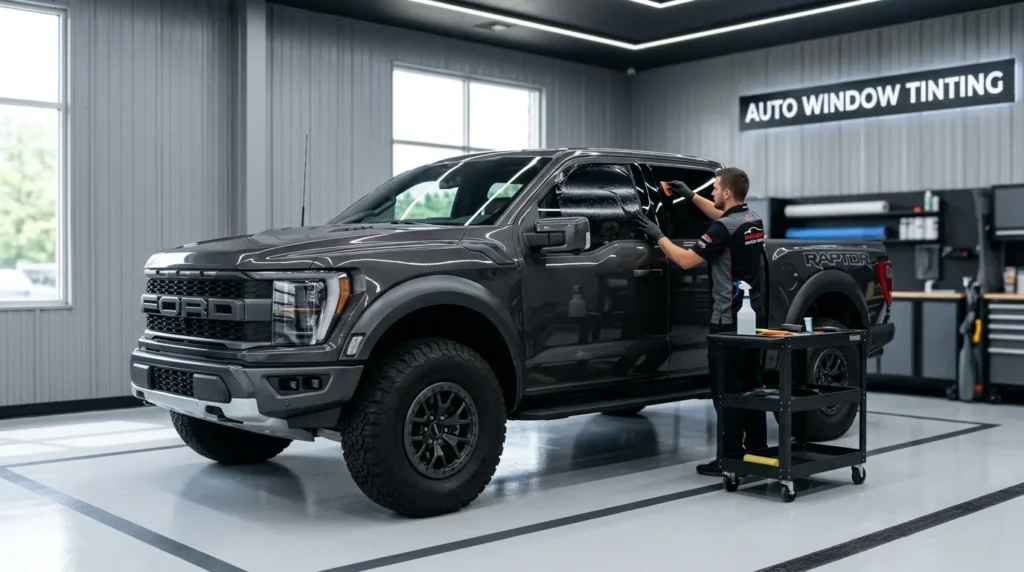
Ask about performance specifications for the exact film rather than judging the product by shade alone.
STEK Ceramic Window Tint
305 Auto Customs installs STEK and GeoShield ceramic tint.
STEK’s SMART+ series is a nano-ceramic automotive window film offered in several VLT levels.
The manufacturer currently lists SMART+ products around:
- 7% VLT
- 16% VLT
- 20% VLT
- 34% VLT
- 43% VLT
- 69% VLT
STEK also publishes data for infrared energy, total solar energy rejection, glare reduction, and UV blocking for each film level.
The availability of multiple shades gives drivers room to choose different film levels for different windows while staying mindful of Florida law.
A film’s published VLT is still not the same as the final reading after installation on factory glass.
Why Fort Lauderdale Drivers Choose Window Tint
Auto Window Tinting in Fort Lauderdale is popular because South Florida vehicles spend plenty of time in bright sunlight.
A typical vehicle may sit:
- In an office parking lot
- Outside a home
- At a shopping center
- In beach-area parking
- At a job site
- In stop-and-go traffic
Window tint can help address several everyday concerns.
Heat
Ceramic films are designed to reduce portions of incoming solar energy.
Glare
Tint can reduce bright visible light reaching the cabin.
UV Exposure
STEK states that its SMART+ ceramic films block 99% of UV radiation.
Privacy
Darker legal film can make the cabin less visible from outside.
Appearance
Tint changes the look of the glass and can work with many vehicle colors and styles.
Choosing Tint for a Daily Driver
Daily commuters should think about more than the darkest legal film.
Ask yourself how you use the vehicle.
Do you travel before sunrise?
Do you spend a lot of time driving at night?
Does glare bother you in afternoon traffic?
Does the vehicle sit outside all day?
Do you want more privacy?
Your answers can help narrow the film choice.
For Auto Window Tinting in Fort Lauderdale, a ceramic film with a lighter appearance may suit one driver while another prefers a darker legal setup.
Visibility should remain part of the discussion, especially for nighttime driving.
Tint for Trucks and SUVs
Trucks and SUVs can have different factory glass configurations from passenger cars.
Some rear windows may already have darker privacy glass.
Privacy glass is not automatically the same as aftermarket ceramic film.
Factory privacy glass may change visible-light transmission without providing the same solar performance as a ceramic aftermarket product.
Adding film over existing privacy glass also changes the final VLT reading.
Vehicle classification matters because Florida’s rear-window threshold can differ for qualifying multipurpose passenger vehicles.
Have the glass and vehicle type considered before selecting rear film.
Tint for Work and Fleet Vehicles
Auto Window Tinting in Fort Lauderdale can also fit business vehicles.
Work vans, pickups, company cars, and fleet vehicles may spend most of the day outdoors.
Tint may help with:
- Driver glare
- Solar heat
- UV exposure
- Cabin privacy
- Glass appearance
305 Auto Customs also offers Commercial Vehicle Wraps and other services for business vehicles.
If several fleet vehicles need tint, provide each vehicle’s make, model, and year.
Glass and body configurations can differ across a mixed fleet.
Replacing Old Window Tint
Older window film can change appearance or begin showing signs that replacement should be discussed.
Possible concerns include:
- Bubbling
- Peeling
- Purple color shift
- Scratches
- Adhesive problems
- Film damage
Old film needs to be removed before replacement film can be installed correctly.
The rear glass deserves special care because many vehicles have defroster lines attached to or incorporated into the glass surface.
Tell the installer about existing film when scheduling Auto Window Tinting in Fort Lauderdale so removal can be considered as part of the job.
Auto Window Tinting Near Fort Lauderdale, FL
305 Auto Customs provides Auto Window Tinting in Fort Lauderdale for drivers throughout Broward County, FL.
The shop installs STEK and GeoShield ceramic window tint for:
- Daily drivers
- Family vehicles
- Luxury cars
- Trucks
- SUVs
- Teslas
- Work vehicles
- Commercial vehicles
305 Auto Customs also serves:
- Davie, FL
- Broward County, FL
- Miami, FL
- Miami-Dade County, FL
The shop is located at:
305 Auto Customs
19597 NE 10th Ave
Bay F, Building 6
Miami, FL 33179
Related services include:
305 Auto Customs carries warranties on its products and services.
Schedule Window Tint With 305 Auto Customs
Auto Window Tinting in Fort Lauderdale should start with two questions.
What do you want from the film?
What does Florida law allow on that window?
The front side windows have a different legal threshold from rear windows.
Passenger cars and qualifying multipurpose passenger vehicles can also have different rear-window limits.
Windshields follow another rule.
Choosing ceramic film gives drivers the chance to consider heat and UV performance along with darkness.
Call 305 Auto Customs at (305) 788-9933 to discuss STEK and GeoShield ceramic tint for your car, truck, SUV, Tesla, or work vehicle.
You can also visit the 305 Auto Customs contact page to schedule an appointment.
Business Hours
Monday through Friday: 8 AM to 6 PM
Saturday and Sunday: 10 AM to 5 PM
305 Auto Customs serves drivers from Fort Lauderdale, FL, Davie, FL, Broward County, FL, Miami, FL, and Miami-Dade County, FL.
Auto Window Tinting FAQs
1. What is the legal front window tint limit in Florida?
Florida Statute 316.2953 requires side windows forward of or adjacent to the driver to allow at least 28% visible light transmission when the film and glass are tested together. Visible-light reflectance cannot exceed 25%.
2. How dark can rear windows be in Florida?
For most passenger vehicles, Florida Statute 316.2954 requires at least 15% visible light transmission on windows behind the driver. Qualifying multipurpose passenger vehicles may use rear sunscreening material with at least 6% visible light transmission. The rear visible-light reflectance limit is 35%.
3. Can I tint my entire windshield in Florida?
Under the standard Florida windshield rule, transparent sunscreening material is allowed along the top strip as long as it does not enter the driver’s direct forward viewing area defined by the AS/1 portion. Medical exemptions can create separate circumstances.
4. Is the percentage printed on tint film the same as the legal window reading?
No. Florida law refers to the film when applied to and tested on the specific vehicle glass. Factory glass already affects light transmission, so the completed window reading may differ from the film’s listed VLT.
5. Does Florida allow a measurement tolerance for window tint?
Yes. Florida Statute 316.2955 says percentage measurements under the applicable window sunscreening statutes are subject to a tolerance of plus or minus 3 percentage points.
6. Can I get a medical exemption for darker window tint in Florida?
Florida has a medical sunscreening exemption process for qualifying conditions. FLHSMV uses Form HSMV 83390 and requires the approved exemption certificate to be kept in the vehicle. Applicants should follow the current FLHSMV instructions before installing film outside standard limits.
7. Where can I get Auto Window Tinting in Fort Lauderdale?
Call 305 Auto Customs at (305) 788-9933 or visit the contact page. The shop installs STEK and GeoShield ceramic tint and serves drivers throughout Fort Lauderdale, FL, Davie, FL, Broward County, FL, Miami, FL, and Miami-Dade County, FL.
Sources
- Florida Statute 316.2953: Side Windows; Restrictions on Sunscreening Material
Publisher: Florida Legislature
Publication Date: 2025 Florida Statutes
URL: https://www.leg.state.fl.us/Statutes/index.cfm?App_mode=Display_Statute&URL=0300-0399%2F0316%2FSections%2F0316.2953.html
Used for the 28% minimum front side-window visible light transmission requirement and 25% maximum visible-light reflectance. - Florida Statute 316.2954: Windows Behind the Driver
Publisher: Florida Legislature
Publication Date: 2025 Florida Statutes
URL: https://www.leg.state.fl.us/Statutes/index.cfm?App_mode=Display_Statute&URL=0300-0399%2F0316%2FSections%2F0316.2954.html
Used for the 15% rear visible-light-transmission limit, 6% multipurpose passenger vehicle provision, 35% reflectance limit, and rear-mirror requirement when applicable. - Florida Statute 316.2952: Windshields; Requirements; Restrictions
Publisher: Florida Legislature
Publication Date: 2025 Florida Statutes
URL: https://www.leg.state.fl.us/Statutes/index.cfm?App_mode=Display_Statute&URL=0300-0399%2F0316%2FSections%2F0316.2952.html
Used for Florida windshield sunscreening rules and the top transparent strip associated with the AS/1 viewing area. - Florida Statute 316.2955: Window Sunscreening Material, Labels and Tolerances
Publisher: Florida Legislature
Publication Date: 2025 Florida Statutes
URL: https://www.leg.state.fl.us/Statutes/index.cfm?App_mode=Display_Statute&URL=0300-0399%2F0316%2FSections%2F0316.2955.html
Used for the installer compliance label, inside-left-door-jamb placement, film and installer identification, approved measuring devices, and plus-or-minus 3% measurement tolerance. - Florida Highway Patrol Policy 17.27: Use of Tint Meters
Publisher: Florida Highway Safety and Motor Vehicles / Florida Highway Patrol
Publication Date: Revised June 16, 2021
URL: https://www.flhsmv.gov/pdf/fhp/policies/1727.pdf
Used for information about approved tint meters, meter checks, clean-window testing, readings, and enforcement procedures. - Sunscreening Medical Exemption Procedure
Publisher: Florida Highway Safety and Motor Vehicles
Publication Date: Revised May 2025
URL: https://www.flhsmv.gov/pdf/proc/rs/rs-48.pdf
Used for information about Florida medical sunscreening exemptions, Form HSMV 83390, certificate requirements, qualifying applications, and transfer rules. - Window Tint
Publisher: 305 Auto Customs
Publication Date: Page does not list a publication date
URL: https://305autocustomsfl.com/services/window-tint/
Used for information about STEK and GeoShield ceramic tint, heat reduction, glare, UV exposure, privacy, warranties, and Broward County, FL service coverage. - STEK SMART+ Ceramic Window Tint
Publisher: STEK USA
Publication Date: Page does not list a publication date
URL: https://www.stek-usa.com/stek-window-tint/automotive-window-tint/smartseries/
Used for manufacturer data about SMART+ VLT levels, nano-ceramic construction, infrared energy, total solar energy rejection, glare reduction, UV blocking, and warranty information. - STEK Automotive Window Tint
Publisher: STEK USA
Publication Date: Page does not list a publication date
URL: https://www.stek-usa.com/stek-window-tint/automotive-window-tint/
Used for manufacturer information about STEK automotive film categories and tint choices. - Contact 305 Auto Customs
Publisher: 305 Auto Customs
Publication Date: Page does not list a publication date
URL: https://305autocustomsfl.com/contact-us/
Used for appointment and contact information.
Is Ceramic Coating Worth It for Your Car in Davie, FL? | 305 Auto Customs
Is ceramic coating worth it for your car in Davie, FL? Learn how ceramic coating helps keep paint cleaner, adds gloss, and makes car care easier in South Florida.
Product Brand: Malbor Coatings
5
Pros
- Is ceramic coating worth it for your car in Davie, FL? Learn how ceramic coating helps keep paint cleaner, adds gloss, and makes car care easier in South Florida.
