
PPF Removal Near Me is a search many vehicle owners make when Paint Protection Film has reached the end of its useful life, has been damaged, needs to be replaced, or simply no longer fits the owner’s plans for the vehicle. Properly installed automotive PPF is designed to remain on the vehicle for years, but it is also designed to be removable when the correct process is used.
The important part is what sits underneath the film.
Factory paint in good condition is very different from a repainted bumper, poorly bonded repair, failing clear coat, or panel with unknown bodywork. Film age, adhesive condition, installation history, heat exposure, and removal technique can also affect the job.
For drivers in Miami, FL, Davie, FL, Broward County, FL, and Miami-Dade County, FL, professional PPF removal can reduce the risk that comes with pulling old film off without knowing what is underneath it.
305 Auto Customs installs Paint Protection Film using STEK and PURE PPF products and works with vehicle protection and restyling every day. If you have old, damaged, lifting, or unwanted film, call (305) 788-9933 or use the 305 Auto Customs contact page to discuss removal and the condition of your vehicle.
Table of Contents
- Can PPF Be Removed Without Damaging Paint?
- Why Vehicle Paint Condition Matters Before PPF Removal
- How Professional PPF Removal Works
- Why Heat Matters During PPF Removal
- Why the Pulling Angle Matters
- Old PPF Can Be Harder to Remove
- What Happens to PPF Adhesive During Removal?
- Can PPF Pull Off Paint?
- Factory Paint vs Repainted Panels
- Signs Your PPF May Be Ready for Removal
- Removing Damaged PPF
- PPF Removal Before Installing New Film
- PPF Removal Before Color PPF or Vinyl Wrap
- What Happens After PPF Is Removed?
- Should You Remove PPF Yourself?
- PPF Removal Near Miami and Davie
- Schedule a PPF Inspection
- PPF Removal FAQs
- Sources
Can PPF Be Removed Without Damaging Paint?
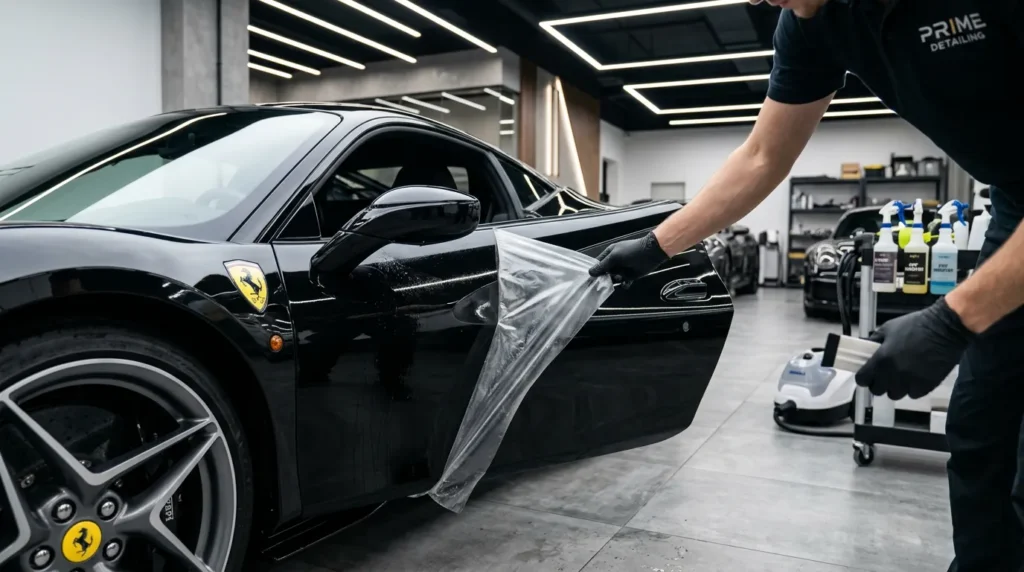
Yes, Paint Protection Film can normally be removed from suitable automotive paint when the film, paint, and removal conditions are appropriate.
Major PPF manufacturers design their films with eventual removal in mind.
3M states that its Paint Protection Film can be removed from a vehicle’s finish and recommends professional removal. XPEL also states that its films are made to allow removal when an owner wants to replace or change protection.
That does not mean paint damage is impossible.
The condition of the surface underneath the PPF matters.
Factory paint with good adhesion gives an installer a different starting point from:
- Repainted body panels
- Poor-quality paint repairs
- Peeling clear coat
- Paint already separating from the panel
- Rust or corrosion
- Previous body damage
- Unknown refinishing work
- Paint that had not fully cured before film installation
When searching PPF Removal Near Me, tell the shop about any known paintwork before removal starts.
If you bought the car used and do not know whether panels were repainted, mention that too.
Why Vehicle Paint Condition Matters Before PPF Removal
Paint Protection Film adheres directly to the vehicle surface.
When the film is eventually removed, the goal is for the adhesive bond between the PPF and paint to release while the paint remains bonded to the panel.
That works best when the underlying finish is sound.
Factory Paint
Original factory paint is generally the preferred surface for PPF installation and removal because the vehicle manufacturer controlled the original paint process.
That still does not make every factory finish immune to problems.
Age, previous damage, corrosion, clear-coat failure, and other conditions can affect a surface.
Repainted Panels
A repainted panel introduces another variable.
The quality of the repair, paint system, preparation, cure time, and adhesion to the substrate can all affect how that finish behaves when film is removed.
3M’s automotive-film support information makes an important distinction: although its PPF is removable, paint pull during removal is not covered by its film warranty.
That is a good reminder that the condition of the vehicle’s paint cannot be controlled by the PPF manufacturer.
Existing Paint Failure
If clear coat is already peeling or paint is lifting before PPF removal starts, the film cannot repair that underlying condition.
Removing film from failing paint requires extra care.
A shop may recommend documenting the surface before beginning so both the owner and installer understand its condition.
How Professional PPF Removal Works
PPF removal is more controlled than grabbing a loose corner and pulling as hard as possible.
The exact process depends on the film, age, panel, adhesive, paint condition, and manufacturer guidance.
A typical professional approach may involve:
- Inspecting the film and vehicle finish
- Checking for repainted or damaged areas
- Warming the film when needed
- Starting from a suitable film edge
- Pulling the film at a controlled angle
- Working across the panel in sections
- Watching how the adhesive releases
- Checking the paint as the film comes away
- Addressing remaining adhesive with suitable products
- Cleaning and inspecting the uncovered surface
The installer should react to what the film is doing rather than forcing the same method across every panel.
Newer film that releases cleanly may come off very differently from older film that has spent years exposed to South Florida sun.
Why Heat Matters During PPF Removal
Temperature can affect how PPF and its adhesive behave during removal.
Manufacturer guidance often calls for controlled heat or steam to assist with film removal.
XPEL’s product-care instructions state that Paint Protection Film removal should be performed with a steamer.
3M also provides removal guidance for protective automotive films that includes using a heat gun or steamer to help release the material.
The goal is controlled warming, not uncontrolled heat.
Too much heat can create new problems.
This is one reason professional PPF removal can make sense when film is old, brittle, damaged, or difficult to lift.
An installer familiar with film removal can adjust temperature as the material changes across the panel.
Why the Pulling Angle Matters
How the film is pulled matters too.
PPF is not normally removed by pulling it straight away from the vehicle at a sharp upward angle.
3M’s published removal guidance for protective automotive film recommends keeping the film at a controlled angle relative to the painted surface while using heat or steam.
A lower, controlled pull can help the adhesive release more predictably.
This is one of the details that may seem minor until someone begins removing several large panels.
A hood, door, roof, bumper, or fender can contain a considerable amount of film.
Maintaining control throughout removal is better than trying to tear the material away quickly.
Old PPF Can Be Harder to Remove
Paint Protection Film changes as it ages.
Film that has spent years outdoors can behave differently from newer PPF.
Factors that may affect old film include:
- UV exposure
- Heat
- Weather
- Film quality
- Installation quality
- Adhesive condition
- Vehicle storage
- Washing habits
- Chemical exposure
- Damage to the film
- How long the film has remained installed
An older film may come away in large sections.
Another may become harder to handle.
Some film can become brittle and break into smaller pieces during removal.
That makes the manufacturer’s expected service life and warranty worth paying attention to when PPF is first installed.
305 Auto Customs installs STEK and PURE PPF and carries warranties on its products and services. Ask what warranty applies to the film selected for your vehicle and what maintenance conditions come with it.
What Happens to PPF Adhesive During Removal?
Sometimes Paint Protection Film releases cleanly with little adhesive left behind.
Other removals may leave adhesive residue on portions of the panel.
The amount can depend on:
- Film age
- Adhesive chemistry
- Heat exposure
- Film condition
- Removal temperature
- Removal technique
- Length of installation
- Surface underneath
Remaining adhesive needs to be handled with products and methods suited to automotive surfaces.
Do not assume that a strong household solvent is safe for automotive paint.
STEK sells dedicated tar and adhesive removal products intended for automotive surfaces, including paint and PPF.
If adhesive remains after PPF removal, the safer route is to use a suitable automotive product and proper technique rather than experimenting with harsh chemicals.
Can PPF Pull Off Paint?
This is one of the biggest concerns behind searches for PPF Removal Near Me.
Yes, paint can sometimes lift during film removal, but that does not mean properly installed PPF normally destroys healthy factory paint.
Paint-lifting risk rises when the underlying finish has problems.
Possible concerns include:
- Repainted panels
- Poor paint adhesion
- Existing clear-coat failure
- Improper refinishing
- Rust
- Previous collision repairs
- Paint installed shortly before PPF
- Unknown body-shop history
- Existing chips or damaged paint edges
3M states that its Paint Protection Film is intended to be removable without damaging the vehicle finish while also noting that paint pull during film removal is not part of its warranty coverage.
Those two points belong together.
Film is made to be removable, but the film manufacturer cannot guarantee the condition or adhesion of every paint system underneath it.
Factory Paint vs Repainted Panels
This distinction deserves attention before PPF removal begins.
Factory-Finished Panels
If a panel still has sound original paint, an installer generally has more confidence in the substrate underneath the film.
The paint still needs to be inspected.
Rock chips, corrosion, previous scratches, and other defects can still be present.
Refinished Panels
A refinished bumper or fender may look perfect from outside but still behave differently during film removal.
The installer may not know:
- How the panel was prepared
- Which paint system was used
- How long it cured
- Whether adhesion problems exist
- Whether previous film was installed too soon after refinishing
If you know that a panel has been repainted, tell the PPF shop.
If you are planning PPF after fresh bodywork, follow the paint manufacturer’s and body shop’s cure recommendations before film installation.
Signs Your PPF May Be Ready for Removal
Not every piece of old PPF needs immediate removal simply because it has been installed for several years.
Look at its condition.
Reasons owners often consider removing or replacing PPF include:
Film Damage
A section may have taken an impact that cut or damaged the film.
Replacing that piece can restore the appearance and film coverage.
Lifting Edges
Edges that have lifted can collect dirt and become increasingly noticeable.
Do not keep pulling at a lifted edge yourself.
Have the section inspected.
Discoloration
Film appearance can change as it ages, especially with older or lower-grade materials.
If the film no longer matches adjacent panels, replacement may be worth considering.
Cracking or Brittleness
Film that becomes brittle or cracked can be more difficult to remove than film that remains flexible.
Waiting until badly deteriorated material is breaking apart can make the removal job more involved.
Changing Your Protection Plan
You may simply want to replace clear PPF with Color PPF, install a different coverage package, or change the vehicle’s appearance.
Removing Damaged PPF
One benefit of traditional film PPF is that damaged panels can often be addressed separately.
If a rock or other object damages the film on the hood, that does not automatically mean every piece of PPF on the vehicle needs to be removed.
An installer can inspect the affected area.
Depending on the damage, the shop may recommend:
- Leaving the film in place
- Replacing one section
- Replacing one full panel
- Removing several adjoining pieces
- Inspecting the paint underneath
This panel-by-panel approach is one reason PPF works well as a sacrificial surface.
The film can take wear and later be replaced while the rest of the vehicle’s coverage remains in place.
PPF Removal Before Installing New Film
Old PPF is often removed because the owner wants fresh film installed.
Once the previous material is off, the exposed surface needs to be evaluated before new PPF goes on.
The process may include:
- Removing remaining adhesive
- Washing the surface
- Removing contamination
- Inspecting the paint
- Checking chips and scratches
- Looking for paint damage
- Correcting suitable paint defects when requested
- Preparing the surface for new film
305 Auto Customs provides Paint Protection Film using STEK and PURE PPF.
If you are removing an older film because you want new coverage, discuss both jobs at the same time.
The installer can review which existing pieces need removal and what coverage you want afterward.
PPF Removal Before Color PPF or Vinyl Wrap
PPF Removal Near Me can also come up when a driver wants to change the appearance of a vehicle.
Maybe you currently have clear film and now want a different color.
305 Auto Customs offers both Color PPF and vinyl wrap.
Switching to Color PPF
Color PPF combines a visible color or finish change with PPF-style film coverage.
If existing clear film is already on the panels being changed, that installation needs to be accounted for before the new Color PPF goes on.
Switching to Vinyl Wrap
Vinyl wrap is commonly used when changing the appearance is the main goal.
Existing PPF placement and condition should be reviewed before wrapping so the installer knows what surface they are working with.
Returning to Paint
Some owners simply want the film removed and the original finish visible again.
Once the PPF is off, cleaning and inspection can show the condition of the underlying paint.
What Happens After PPF Is Removed?
Once the film has been removed, the paint is visible again.
What happens next depends on its condition and your plans.
Cleaning
Any remaining adhesive or film residue should be removed with products suited to the surface.
Paint Inspection
This is a good time to look at the paint for:
- Chips
- Scratches
- Clear-coat problems
- Previous repairs
- Staining
- Swirl marks
Paint Correction
If suitable painted panels have swirl marks or other correctable surface defects, paint correction may be discussed before another coating or film is installed.
Paint correction does not repair missing paint, dents, failing clear coat, or poor bodywork.
It is intended for suitable defects within a healthy paint finish.
New PPF
If the paint is ready, a new PPF package can be installed.
Ceramic Coating
Some owners decide not to reinstall film and instead discuss ceramic coating.
Keep in mind that ceramic coating and PPF do different jobs.
Ceramic coating does not replace the physical film barrier provided by PPF against road debris.
Should You Remove PPF Yourself?
You may be able to lift PPF at home, but the bigger question is whether you know enough about the film and paint underneath to judge what is happening.
DIY removal becomes riskier when:
- You do not know the vehicle’s paint history
- The panel has been repainted
- Film is very old
- Film is brittle
- Adhesive is not releasing normally
- Clear coat appears weak
- Paint begins lifting
- Several large panels need removal
- The film tears into small pieces
If the film begins behaving unexpectedly, forcing it is rarely the right answer.
Professional PPF Removal Near Me is especially worth considering on luxury vehicles, exotics, collector cars, recently purchased used vehicles, repainted cars, and vehicles with older film.
The cost of addressing damaged paint can turn an attempted shortcut into a much larger job.
Call the shop and describe the condition of the film instead of pulling more material away once something looks wrong.
PPF Removal Near Miami and Davie
Drivers searching for PPF Removal Near Me in South Florida can contact 305 Auto Customs to discuss existing film, the condition of their vehicle, and what they want to do next.
305 Auto Customs serves customers in:
- Miami, FL
- Davie, FL
- Broward County, FL
- Miami-Dade County, FL
The shop is located at:
305 Auto Customs
19597 NE 10th Ave
Bay F, Building 6
Miami, FL 33179
305 Auto Customs works with vehicle protection and restyling services including:
- Paint Protection Film
- Color PPF
- Ceramic Coating
- Vinyl Wrap
- Window Tint
- Paint Correction
The shop is STEK certified, is a STEK vendor, installs STEK and PURE PPF, and carries warranties on its products and services.
If you have a different brand of film already on the vehicle, tell the shop when you call.
Knowing the approximate film age, brand, affected panels, and paint history can help the team understand the job before your appointment.
Schedule a PPF Inspection
PPF Removal Near Me should be about more than finding someone willing to pull film from a car.
The condition underneath the PPF matters.
Sound factory paint, old refinished paint, failing clear coat, and previously repaired body panels may respond differently during removal.
Film age and condition matter too.
If your PPF is lifting, damaged, discolored, brittle, or ready to be replaced, have it inspected before trying to remove a large section yourself.
Call 305 Auto Customs at (305) 788-9933 to discuss your existing PPF and what you want to do after removal.
You can also visit the 305 Auto Customs contact page to schedule an appointment.
Tell the team:
- Which panels have PPF
- How old the film may be
- Whether you know the film brand
- Whether any panels have been repainted
- What condition the PPF is in
- Whether you want replacement PPF afterward
- Whether you are considering Color PPF, wrap, or ceramic coating
Business Hours
Monday through Friday: 8 AM to 6 PM
Saturday and Sunday: 10 AM to 5 PM
305 Auto Customs serves vehicle owners in Miami, FL, Davie, FL, Broward County, FL, and Miami-Dade County, FL.
PPF Removal FAQs
1. Can PPF be removed without damaging factory paint?
Quality Paint Protection Film is designed to be removable from suitable automotive finishes. 3M states that its PPF can be removed and recommends having an authorized installer handle removal. Paint condition still matters, so existing paint failure, repairs, or refinished panels can increase risk.
2. Can PPF removal pull off paint?
It can happen when the underlying paint is weak, poorly bonded, previously repaired, or already failing. Repainted panels deserve extra attention because the installer may not know how the refinishing work was prepared or cured. Tell the shop about known bodywork before PPF removal begins.
3. How is Paint Protection Film removed?
Professional removal may use controlled heat or steam while the film is pulled from the surface at a suitable angle. XPEL recommends steam for PPF removal, while 3M also publishes removal guidance involving heat or steam for protective automotive film. The exact approach depends on the product and surface.
4. What happens if adhesive stays on the paint?
Adhesive residue can be treated with suitable automotive adhesive-removal products and methods. Avoid reaching for unknown household solvents because they may not be suitable for automotive finishes.
5. Should old PPF be removed before it cracks?
If film is showing signs of age, brittleness, cracking, lifting, or other deterioration, having it inspected can make sense. Severely degraded material may become more difficult to remove cleanly than film that still remains flexible.
6. Can I replace old PPF after it is removed?
Yes. Once old film and adhesive are removed, the surface can be inspected and prepared for new PPF if the paint is suitable. 305 Auto Customs installs STEK and PURE Paint Protection Film for customers who want fresh coverage.
7. Where can I ask about PPF Removal Near Me in South Florida?
Call 305 Auto Customs at (305) 788-9933 or use the contact form. The shop is located in Miami, FL and serves customers from Davie, FL, Broward County, FL, and Miami-Dade County, FL. Tell the team about your current PPF, paint history, and whether you want new film installed after removal.
Sources
- Auto Films Support
Publisher: 3M
Publication Date: Page does not list a publication date
URL: https://www.3m.com/3M/en_US/car-personalization-us/support/
Used for manufacturer information about Paint Protection Film removal, vehicle finish considerations, and paint pull during removal. - 3M Scotchgard Paint Protection Film Pro Series
Publisher: 3M
Publication Date: Page does not list a publication date
URL: https://www.3m.com/3M/en_US/p/dc/v100610140/
Used for manufacturer guidance stating that Paint Protection Film is removable and recommending professional removal. - XPEL Product Care Instructions
Publisher: XPEL
Publication Date: Page does not list a publication date
URL: https://www.xpel.com/product-care
Used for manufacturer guidance recommending steam during Paint Protection Film removal and care around automotive film. - XPEL Frequently Asked Questions
Publisher: XPEL
Publication Date: Page does not list a publication date
URL: https://www.xpel.com/faqs
Used for information about PPF removability and replacing or changing film. - STEK Frequently Asked Questions
Publisher: STEK USA
Publication Date: Page does not list a publication date
URL: https://www.stek-usa.com/company/stek-faqs/
Used for manufacturer information about STEK Paint Protection Film and film behavior. - STEK Car Care
Publisher: STEK USA
Publication Date: Page does not list a publication date
URL: https://www.stek-usa.com/formula-car-care/
Used for information about automotive-safe adhesive and contamination removal products. - Paint Protection Film
Publisher: 305 Auto Customs
Publication Date: Page does not list a publication date
URL: https://305autocustomsfl.com/services/paint-protection-film/
Used for information about STEK and PURE PPF, film services, warranties, and South Florida service areas. - Color PPF
Publisher: 305 Auto Customs
Publication Date: Page does not list a publication date
URL: https://305autocustomsfl.com/services/color-ppf/
Used for information about changing from clear film to Color PPF. - Contact 305 Auto Customs
Publisher: 305 Auto Customs
Publication Date: Page does not list a publication date
URL: https://305autocustomsfl.com/contact-us/
Used for contact information, location, service areas, and appointment CTA.
Is Ceramic Coating Worth It for Your Car in Davie, FL? | 305 Auto Customs
Is ceramic coating worth it for your car in Davie, FL? Learn how ceramic coating helps keep paint cleaner, adds gloss, and makes car care easier in South Florida.
Product Brand: Malbor Coatings
5
Pros
- Is ceramic coating worth it for your car in Davie, FL? Learn how ceramic coating helps keep paint cleaner, adds gloss, and makes car care easier in South Florida.
