
Window tinting in Tamarac, FL can help drivers and business owners manage South Florida’s strong sunlight, uncomfortable heat, and glare. Whether you’re commuting along Commercial Boulevard or managing a storefront with large glass windows, choosing the right window film can make a noticeable difference in how a space looks and feels.
But there’s an important distinction.
Automotive window tint and storefront window film aren’t necessarily the same products. They are designed for different types of glass, operating conditions, and performance requirements.
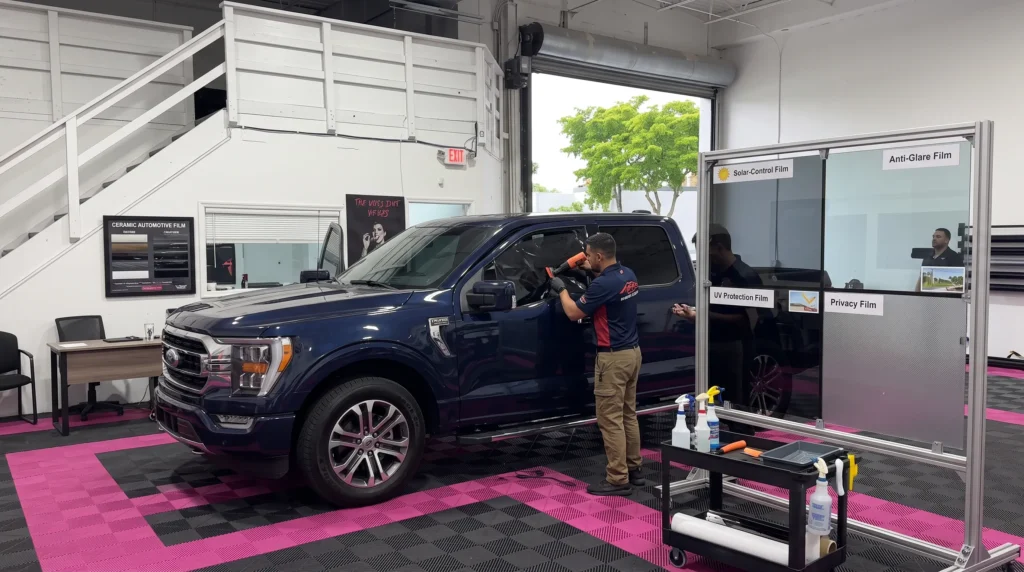
For your vehicle, ceramic window tint may help reduce solar heat, protect against UV exposure, and give the glass a cleaner appearance. For a retail storefront, architectural window film may help manage sunlight, improve daytime privacy, or reduce glare on merchandise displays and computer screens.
Both applications require careful product selection.
At 305 Auto Customs, we provide professional automotive window tinting for customers from Tamarac, FL, Davie, FL, Fort Lauderdale, FL, Miami, FL, Broward County, FL, and Miami-Dade County, FL.
Our Miami, FL shop installs STEK and Geoshield ceramic automotive window films for cars, SUVs, pickup trucks, Teslas, and suitable work vehicles.
A note about storefront installations: Our currently published services focus on automotive window tint. Commercial architectural window film is discussed here to help Tamarac business owners understand their options. Contact 305 Auto Customs to confirm whether a particular storefront film project is available before scheduling.
Here’s what matters when comparing window film for vehicles and storefronts in Tamarac, FL.
Table of Contents
- Why Window Tinting Matters in Tamarac, FL
- Automotive Tint vs Storefront Window Film
- Ceramic Automotive Window Tint Options
- Comparing Automotive Film Performance
- Window Tint Coverage for Cars and SUVs
- Florida Window Tint Laws for Vehicles
- Storefront Solar Control Window Film
- Privacy and Decorative Storefront Films
- Security and Anti-Graffiti Window Films
- Choosing Film for Existing Storefront Glass
- Window Film, UV Protection, and Energy Use
- Storefront Film and Florida Hurricane Safety
- Storefront Appearance and Local Requirements
- Professional Window Film Installation
- Window Tint Care and Warranty Questions
- Window Tint Services Near Tamarac, FL
- Contact 305 Auto Customs
- Frequently Asked Questions
- Sources
Why Window Tinting in Tamarac, FL Is Worth Considering
Tamarac, FL is a city in central Broward County, FL, with residential neighborhoods, commercial corridors, retail centers, and office properties.
The City of Tamarac describes the community as part of the greater Miami-Fort Lauderdale region, with convenient access to businesses and transportation routes throughout South Florida.
For vehicle owners, daily life can involve sitting in traffic, traveling between appointments, and leaving cars parked outside.
For business owners, large storefront windows may bring afternoon sunlight directly into customer areas or employee workspaces.
Both situations create reasons to consider window film.
How Sunlight Affects Cars
When sunlight passes through vehicle windows, it can warm seats, dashboards, and other interior surfaces.
That heat can make the cabin uncomfortable, especially after a vehicle has been parked outdoors.
A suitable automotive film can reduce some of the incoming solar energy.
It may also reduce glare and help protect interior materials from UV exposure.
How Sunlight Affects Storefronts
Large retail windows provide visibility and natural light.
Customers can see inside, merchandise is visible from the sidewalk, and the business feels open.
But strong sunlight may also:
- Create uncomfortable spots near the glass
- Cause glare on checkout screens
- Make display areas excessively bright
- Increase solar heat gain
- Expose merchandise and interior furnishings to UV radiation
- Make certain work areas difficult to use during sunny hours
Commercial window film can help address some of these concerns when the correct product is installed on compatible architectural glass.
Why the Film Type Matters
A film chosen for a sedan shouldn’t automatically be applied to a storefront.
Automotive and architectural films have different intended uses.
The window’s construction, film specifications, and manufacturer approval all matter.
For window tinting in Tamarac, FL, first identify whether the project involves a vehicle or a building.
Then compare products designed for that application.
Automotive Tint vs Storefront Window Film: What’s Different?
Both film categories can reduce incoming sunlight.
But the glass they cover is often very different.
Automotive windows may be curved, move up and down, or include defroster lines and specialized coatings.
Storefront glass may be large, flat, insulated, laminated, tempered, or treated with low-emissivity coatings.
These differences affect installation and film selection.
Automotive Window Tint
Automotive film is designed for suitable vehicle glass.
Common goals include:
- Solar heat reduction
- Glare control
- UV rejection
- Passenger privacy
- A coordinated exterior appearance
The selected film must also comply with Florida’s motor vehicle tint laws.
Architectural Storefront Window Film
Architectural film is designed for building glass.
Some products focus on reducing solar heat and glare.
Others are made for decorative privacy, glass-fragment retention, or surface protection.
The 3M architectural window film catalog includes separate product categories for solar control, privacy, insulation, and safety or security applications.
These are examples of architectural film technologies, not a list of products confirmed to be installed by 305 Auto Customs.
Quick Comparison
| Feature | Automotive Window Tint | Storefront Window Film |
|---|---|---|
| Intended surface | Vehicle glass | Building glass |
| Common goal | Cabin heat, glare, UV, privacy | Indoor heat, glare, daylight, privacy |
| Glass design | Often curved or movable | Often large and stationary |
| Typical products | Carbon and ceramic automotive films | Solar, decorative, privacy, and safety films |
| Compliance concern | Florida motor vehicle tint laws | Building, glazing, property, and applicable local rules |
| Installation planning | Vehicle model and window coverage | Glass construction, dimensions, access, orientation |
| 305 Auto Customs availability | Automotive ceramic tint confirmed | Storefront installation must be confirmed |
The distinction is worth understanding before requesting a quote.
Ceramic Automotive Window Tint Options in Tamarac, FL
For drivers, ceramic window tint is a popular way to manage sunlight without selecting extremely dark film.
Ceramic films use specialized materials to control portions of incoming solar energy.
Their performance depends on the film series, shade, and existing glass.
Why Drivers Choose Ceramic Tint
Ceramic film can provide:
- Solar heat rejection
- Reduced daytime glare
- High UV rejection
- A variety of visible light transmission levels
- A cleaner glass appearance
- Additional daytime privacy
- Product-specific warranty coverage
The exact results depend on the film selected.
STEK Ceramic Window Tint
305 Auto Customs installs STEK ceramic window films.
One example is STEK SMART+ nano-ceramic window tint.
STEK publishes performance ratings for its SMART+ shades, including total solar energy rejection, infrared energy rejection, visible light transmission, and UV rejection.
Geoshield Ceramic Window Tint
Our shop also advertises Geoshield ceramic automotive tint.
Ask which Geoshield series is currently available and how its published specifications compare with the STEK options offered for your vehicle.
A lighter film may suit someone who drives regularly after sunset.
Another driver may prefer a darker legal shade for rear-passenger privacy.
The film should fit your needs rather than simply follow a trend.
Understanding Automotive Window Film Performance
Two window films may appear equally dark but reject different amounts of solar heat.
The manufacturer’s performance ratings help explain those differences.
What Is Visible Light Transmission?
Visible Light Transmission, or VLT, describes how much visible light passes through the tested glazing.
A higher VLT produces a lighter appearance.
A lower VLT produces a darker appearance.
VLT is important for visibility and Florida legal compliance.
What Is Total Solar Energy Rejection?
Total Solar Energy Rejection, or TSER, describes the percentage of incoming solar energy rejected by the tested film-and-glass system.
When cabin heat is your main concern, TSER is a useful comparison.
What Is Infrared Energy Rejection?
Infrared Energy Rejection, or IRER, measures infrared energy rejection across a defined wavelength range.
It differs from a narrow-band infrared measurement taken at a single wavelength.
Reviewing TSER and IRER together provides more context than relying on one promotional figure.
STEK SMART+ Ceramic Film Examples
| STEK film | Published VLT | Published TSER | Published UV rejection |
|---|---|---|---|
| SMART 70 | 69% | 44% | 99% |
| SMART 45 | 43% | 46% | 99% |
| SMART 35 | 34% | 49% | 99% |
| SMART 20 | 20% | 53% | 99% |
Source: STEK SMART+ Ceramic Window Tint Specifications.
These are manufacturer-published specifications under the stated test conditions.
They are not guaranteed installed readings for a particular vehicle, and they do not establish whether a shade is legal on your factory glass.
Does Darker Film Always Mean Stronger UV Protection?
No.
The table shows the SMART+ products listed with the same published 99% UV rejection, even though their VLT levels vary.
UV rejection and film darkness are different measurements.
This is one reason window tinting in Tamarac, FL should involve reviewing actual specifications before selecting a shade.
Automotive Window Tint Coverage: Two Windows or the Whole Vehicle?
The number of windows included in the project affects the installation plan.
A two-front-window service differs from a full side-and-rear glass installation.
Two Front Windows
305 Auto Customs advertises ceramic tint for the driver and front passenger windows.
This option may interest owners whose vehicles already have factory privacy glass in the rear.
It can also help address sunlight reaching the front occupants during daily travel.
Side and Rear Glass
Broader coverage can include:
- Front side windows
- Rear passenger windows
- Rear quarter glass
- Rear windshield
- Other suitable fixed glass sections
The exact coverage depends on the vehicle.
SUV and Pickup Truck Glass
SUVs and pickups may have factory privacy glass.
That glass can look dark without necessarily offering the same solar heat rejection as a selected ceramic film.
Before adding aftermarket film, the installer should check the existing glazing and the vehicle’s legal classification.
Tesla and Other Electric Vehicles
Teslas can have curved rear glass, frameless side windows, and panoramic roof panels.
305 Auto Customs provides Tesla window tint services for Model 3, Model Y, Model S, and Model X vehicles.
A film suitable for side windows isn’t automatically approved for a glass roof.
Roof applications require a separate compatibility review.
Florida Window Tint Laws for Tamarac, FL Drivers
Florida regulates automotive tint according to visible light transmission and reflectance.
These laws apply to vehicles operated throughout Tamarac, FL, Broward County, FL, Miami-Dade County, FL, and the rest of Florida.
Front Side Window Limits
Under Florida Statutes, Section 316.2953, front side windows must allow at least 28% visible light transmission after the film is installed and tested on the vehicle.
The visible-light reflectance cannot exceed 25%, measured from the nonfilm side.
Rear Window Limits
Florida Statutes, Section 316.2954 provides different limits for windows behind the driver.
For ordinary passenger cars, the conventional film provision generally requires at least 15% VLT.
For qualifying multipurpose passenger vehicles, the law permits at least 6% VLT on applicable rear windows.
The same provision limits visible-light reflectance to 35%.
A vehicle’s legal classification should be confirmed before choosing a darker rear shade.
Florida Tint Reference Chart
| Window location | Passenger car | Qualifying multipurpose passenger vehicle |
|---|---|---|
| Front side windows | At least 28% VLT | At least 28% VLT |
| Rear side windows | At least 15% VLT | At least 6% VLT |
| Rear window | At least 15% VLT | At least 6% VLT |
| Front side reflectance | Maximum 25% | Maximum 25% |
| Rear film reflectance | Maximum 35% | Maximum 35% |
| Windshield | Generally restricted to a transparent upper AS/1 strip | Same general restriction |
These are general requirements for conventional aftermarket film. Certain other materials and approved exemptions have separate rules.
What About the Windshield?
Under Florida Statutes, Section 316.2952, aftermarket windshield sunscreening is generally restricted.
A transparent strip may be permitted along the upper windshield within the allowed AS/1 area.
A nearly clear ceramic film is not automatically lawful across the entire windshield.
Why Factory Glass Matters
A film’s published VLT is not necessarily the final VLT once installed.
Factory glass already reduces some visible light.
For instance, a film with 35% VLT applied to glass that transmits 80% of visible light could produce a simplified combined reading near 28%.
The finished glass-and-film combination must comply with the applicable law.
Compliance Labeling
Florida Statutes, Section 316.2955 requires a compliance label for covered aftermarket tint installations.
The installer must affix the label inside the left door jamb, identifying the material and installer or seller.
Florida also provides a three-percentage-point measurement tolerance, which should not be treated as permission to deliberately install noncompliant film.
These Florida motor vehicle tint percentages do not automatically apply to retail storefront glass. Building window film is subject to a different set of considerations.
Storefront Solar Control Window Film in Tamarac, FL
Storefront windows have a different job from car windows.
They allow customers to see inside a business, display merchandise, and bring daylight into retail spaces.
But large glass panels can also admit solar heat and glare.
Architectural solar-control film is designed to manage sunlight through building glass.
Clear and Light Architectural Films
Some commercial films are made to reduce solar heat while preserving much of the natural light.
These products can appeal to business owners who want customers to see inside without heavily darkening the storefront.
The U.S. Department of Energy explains how glazing coatings and solar-control technologies affect heat transfer and visible daylight.
The performance depends on the complete glass system.
Reflective Solar Window Film
Reflective architectural film may reduce solar heat and create a more mirror-like exterior appearance.
That may appeal to certain office properties or businesses where solar control matters more than completely clear views through the glass.
But a highly reflective storefront may not suit every retail business.
If people need to see merchandise through the windows, stronger reflectivity can work against that goal.
Neutral Solar-Control Film
A neutral architectural film may provide a more understated appearance.
This can be useful for businesses that want some solar control while maintaining a consistent glass color.
Where Storefront Solar Film May Help
Common areas include:
- Front display windows
- Customer waiting areas
- Glass office walls facing outdoors
- Reception spaces
- Retail checkout areas
- Sun-exposed employee workspaces
The appropriate film depends on the glass and the amount of sunlight reaching it.
Does Solar Film Reduce Air Conditioning Use?
Reducing unwanted solar heat gain can help address one source of cooling demand.
But the actual effect on a building depends on window size, orientation, glass construction, shading, air-conditioning equipment, and other factors.
No film should be presented as a guarantee of a particular change in a business’s utility bills.
Storefront Privacy and Decorative Window Film Options
Not every business wants a clear view through every window.
Some storefronts contain office areas, customer consultation spaces, treatment rooms, or back-of-house workspaces.
Privacy film can help control visibility in selected areas.
Frosted Window Film
Frosted film creates a translucent appearance.
It allows light through while obscuring a clear view of what is behind the treated glass.
This may work for:
- Interior meeting rooms
- Consultation spaces
- Partitions
- Lower sections of storefront glass
- Back-office windows
Frosted film is a different product category from high-performance solar tint.
Don’t assume every decorative film provides strong heat rejection unless the specifications support that use.
Reflective Daytime Privacy Film
Some reflective films make it harder to see inside when the outdoor area is brighter than the interior.
But this effect can change after sunset.
If the store’s interior lights are bright at night, people outside may be able to see into the building.
The International Window Film Association’s privacy and glare guidance discusses the use of specialty films for commercial privacy and visual comfort.
Decorative Stripes and Partial Coverage
A business may prefer frosted bands or partial glass coverage rather than obscuring the entire storefront.
This can provide visual separation while preserving a welcoming atmosphere.
If decorative film includes logos or promotional text, check the property’s signage requirements before installation.
Think About the Customer Experience
A retail store benefits from visibility.
Customers should be able to identify the entrance, view merchandise, and understand whether the business is open.
A heavily darkened or reflective storefront may not suit that purpose.
For storefront window tinting in Tamarac, FL, start with the business’s actual use of the glass.
Safety, Security, and Anti-Graffiti Storefront Window Films
Commercial window films are available for purposes beyond sunlight control.
Some products are designed to help retain broken glass fragments.
Others provide a removable surface layer to help protect the glass from scratching or graffiti.
These should be treated as separate product categories.
Safety and Security Film
Certain architectural safety films are designed to help hold pieces of broken glass together when used in suitable systems.
The result depends on the film, glass, frame, attachment method, and type of impact.
A product marketed as security film does not automatically make a storefront break-in-proof.
Anti-Graffiti Film
Anti-graffiti products can create a replaceable protective layer over suitable glass.
The 3M architectural safety and security film catalog lists anti-graffiti films among its commercial options.
These may be considered by businesses concerned about scratched or damaged display glass.
Different Products Have Different Jobs
Solar film is not necessarily security film.
Security film is not necessarily an anti-graffiti product.
And a film designed to help retain fragments is not the same as certified impact-resistant glazing.
Before choosing a product, identify whether your main concern is glare, privacy, breakage, or surface damage.
Why Storefront Glass Compatibility Matters Before Installing Tint
This is one of the most important parts of a commercial window film project.
Large building windows may contain different glass constructions and coatings.
The wrong film can change how the glass absorbs and distributes solar heat.
Single-Pane vs Insulated Glass
Some storefronts use single-pane glass.
Others use insulated glazing units made with two or more panes.
The U.S. Department of Energy explains that insulated glazing and low-emissivity coatings change how windows transfer heat.
That existing construction influences which additional films may be suitable.
What Is Low-E Glass?
Low-emissivity, or low-E, glass includes a coating designed to manage heat transfer.
Some low-E glass already reduces solar heat gain.
Adding another film may change thermal performance.
The International Window Film Association recommends reviewing the type and location of low-E coatings before installing aftermarket film.
Can Window Film Cause Thermal Stress?
An unsuitable film can affect heat absorption within the glass.
Uneven temperature changes can contribute to thermal stress.
Film manufacturers use compatibility guidelines to help installers identify suitable film-and-glass combinations.
Before installing architectural film, the professional should review:
- Glass type
- Glass thickness
- Low-E coatings
- Insulated glass construction
- Tempered or laminated glass
- Existing cracks or damage
- Window orientation
- Partial shading
- Manufacturer restrictions
- Existing glazing warranties
Can Automotive Ceramic Tint Be Used on a Storefront?
Not without manufacturer approval for the architectural application.
Automotive film specifications don’t establish compatibility with commercial building glass.
Use products designed and approved for the actual window system.
Window Film for UV Protection, Merchandise, and Interior Comfort
Both automotive and architectural window films can provide UV rejection.
But the performance of the finished installation depends on the glass and film.
UV Protection for Vehicles
Many automotive ceramic films provide high UV rejection.
This can help limit one contributor to fading of seats, trim, and other interior materials.
UV Protection for Storefronts
Storefront windows may allow sunlight to reach:
- Clothing displays
- Upholstered furniture
- Printed materials
- Rugs
- Artwork
- Retail fixtures
- Office furnishings
According to the International Window Film Association, some films can block up to 99% of ultraviolet radiation.
However, no window film prevents every type of fading.
Visible light, heat, materials, and exposure time also contribute.
Glare Control for Retail Spaces
Glare can be uncomfortable for both customers and employees.
It may reflect off computer screens, glass counters, or glossy displays.
A suitable architectural film can reduce the amount of incoming visible light.
The challenge is choosing enough glare control without making the space unnecessarily dark.
Keep the Purpose of the Space in Mind
A showroom displaying merchandise needs different lighting from a private consultation room.
A business with large windows facing direct afternoon sunlight may have different requirements from one shaded by neighboring buildings.
The film should support the space’s daily use.
Is Storefront Window Film a Substitute for Hurricane Protection?
No.
This distinction is particularly important in South Florida.
Ordinary solar-control film and standard security film should not be treated as replacements for approved hurricane-impact windows, shutters, or other code-compliant storm protection.
Why Security Film Is Different from Impact-Rated Glass
Certain safety films can help hold glass fragments together under specified conditions.
But hurricane protection involves a complete glazing and framing system that must meet applicable testing and approval requirements.
Adding window film does not automatically make existing storefront glass hurricane-rated.
Florida Has Specific Restrictions on Hurricane Protection Claims
3M’s architectural security film information includes a Florida notice stating that certain film products are not approved for use as hurricane, windstorm, or wind-borne-debris impact protection.
The notice references Florida Statute 553.842.
Storefront owners should rely on code-compliant storm protection products and qualified building professionals when addressing hurricane exposure.
What If You Want Both Solar Control and Security?
Ask an architectural film specialist about the available product categories and their approved uses.
A combined project may require more than one performance consideration.
Never assume a film is approved for hurricane protection unless a complete system has the required Florida approval for that use.
Storefront Window Film and Local Requirements in Tamarac, FL
Before changing the exterior appearance of a commercial property, it’s worth checking whether approvals apply.
The requirements may depend on the building, lease, planned film, and whether the project includes graphics or other changes.
Talk with the Property Owner or Manager
If you lease a retail space, your lease may contain rules about:
- Window appearance
- Exterior reflectivity
- Promotional graphics
- Signage
- Glass alterations
- Required contractor documentation
Obtain any needed owner or property-management approval before work begins.
Check with the City of Tamarac
The City of Tamarac Building Department provides information about construction requirements and permits.
The city’s Permits and Inspections page explains how property owners and contractors can determine which approvals apply to a proposed project.
Not every simple film application necessarily requires a building permit.
But do not assume that a storefront treatment involving exterior signage, glazing alterations, or another regulated change is automatically exempt.
If there is uncertainty, ask the city or a qualified building professional.
Storefront Film Is Not the Same as Vehicle Tint Law
Florida’s 28% front side window limit applies to specified motor vehicle windows.
It should not be copied over as a statewide storefront tint percentage.
Building projects can involve different regulations, lease requirements, glazing standards, and appearance restrictions.
What Happens During Professional Window Film Installation?
Automotive and architectural projects both involve glass preparation and film application.
But the planning process differs.
Automotive Tint Installation
A vehicle appointment generally includes:
- Vehicle and glass inspection
- Film and legal shade selection
- Cleaning and surface preparation
- Cutting and fitting film
- Applying film to the approved glass
- Edge finishing
- Final inspection
- Aftercare instructions
Old tint may need removal before the new product is installed.
Storefront Film Installation
An architectural project generally requires a review of the actual building windows.
A qualified specialist may need to:
- Identify the glass construction.
- Check low-E coatings and other glazing characteristics.
- Measure the windows.
- Review the solar exposure and desired appearance.
- Confirm product compatibility.
- Check applicable property or local requirements.
- Plan access to the glass.
- Install the approved architectural film.
- Inspect the result.
- Explain drying and cleaning instructions.
These are general industry procedures, not a confirmation that 305 Auto Customs currently provides commercial architectural installation.
Why Installation Quality Matters
The glass must be cleaned before film is applied.
Dirt, oils, and residue can interfere with the finished appearance.
Large storefront panels also require careful film handling and consistent alignment.
The International Window Film Association’s inspection guidelines explain that both automotive and architectural films may show some residual application moisture during the initial drying period.
The expected appearance depends on the product and curing conditions.
How to Care for Window Tint and Understand Warranty Coverage
Window film needs suitable care after installation.
The exact directions vary by product and application.
Let New Film Dry
Automotive and architectural window film commonly uses an application solution.
Some residual moisture may remain after installation.
Small moisture patterns or temporary haze can occur during curing.
The drying period depends on the film, glass, and surrounding conditions.
Avoid Early Cleaning
Don’t scrub freshly installed film before the manufacturer or installer permits cleaning.
For automotive film, ask when the windows can be lowered.
For storefront film, ask when routine glass cleaning can resume.
Use Nonabrasive Cleaning Materials
The International Window Film Association recommends soft cloths and nonabrasive glass cleaning methods.
Avoid rough pads, sharp scraping tools, and products not approved for the selected film.
Understand Warranty Coverage
A film manufacturer’s warranty may cover specified material defects.
The installer may offer separate workmanship coverage.
Ask about:
- Film brand and series
- Covered defects
- Exclusions
- Registration requirements
- Whether existing glass warranties are affected
- Maintenance obligations
- Transferability, if applicable
305 Auto Customs advertises warranties on its automotive products and services.
Warranty coverage for any proposed storefront project would need separate confirmation.
Window Tinting Near Tamarac, FL and Surrounding Broward County Communities
305 Auto Customs provides automotive ceramic window tint from our shop in Miami, FL.
We welcome vehicle owners from Tamarac, FL and surrounding communities throughout Broward County, FL.
Automotive Window Tint for Tamarac, FL Drivers
Whether you own a sedan, SUV, pickup, or Tesla, our team can discuss suitable ceramic automotive film options.
Customers often ask about heat rejection, privacy, legal shades, and replacement of older tint.
Serving Nearby Broward County, FL Communities
We welcome automotive tint inquiries from:
- Tamarac, FL
- North Lauderdale, FL
- Coral Springs, FL
- Lauderdale Lakes, FL
- Lauderhill, FL
- Sunrise, FL
- Plantation, FL
- Margate, FL
- Coconut Creek, FL
- Pompano Beach, FL
- Fort Lauderdale, FL
- Davie, FL
Our shop is based in Miami, FL rather than Tamarac, FL.
Contact us to arrange an appointment before visiting.
Serving Miami, FL and Miami-Dade County, FL
305 Auto Customs also welcomes automotive customers from:
- Miami, FL
- Miami Gardens, FL
- North Miami, FL
- North Miami Beach, FL
- Aventura, FL
- Doral, FL
- Hialeah, FL
- Miami Lakes, FL
- Other Miami-Dade County, FL communities
Related Services for Vehicle Owners and Businesses
Along with automotive window tint, 305 Auto Customs offers:
- Tesla window tint
- Commercial vehicle wraps
- Business fleet wraps
- Paint protection film
- Ceramic coating
Businesses operating company cars, vans, and service vehicles may be interested in both automotive tint and commercial vehicle branding.
A fleet wrap serves a different purpose from storefront privacy film or architectural solar tint.
The shop’s published commercial wrap services concern vehicles, not building glass.
Why Contact 305 Auto Customs?
305 Auto Customs provides automotive film and exterior styling services for drivers and businesses throughout South Florida.
Our shop installs STEK and Geoshield ceramic automotive tint.
We are STEK certified and a STEK vendor for applicable automotive products, and we carry warranties on our products and services.
For automotive window tinting in Tamarac, FL, contact our team to discuss available film choices, legal shades, and appointment scheduling.
For storefront glass, ask whether the specific architectural film service is available before making plans.
Contact 305 Auto Customs About Window Tinting in Tamarac, FL
Window tinting in Tamarac, FL includes different types of projects.
For vehicle owners, ceramic window film may help reduce solar heat, glare, and UV exposure while improving the appearance of suitable glass.
For retail storefronts, architectural films can provide solar control, daytime privacy, glare reduction, or decorative effects, depending on the product.
But the right material depends on the application.
Automotive film must meet Florida vehicle tint laws.
Storefront film must be compatible with the building’s glass, and the property may have separate appearance or approval requirements.
At 305 Auto Customs, our confirmed window tint services currently focus on vehicles.
We can discuss STEK and Geoshield ceramic automotive tint for cars, trucks, SUVs, and Teslas.
If you are interested in storefront film, contact our team to confirm whether architectural window film service is currently offered for your project.
Contact Information
Business Name: 305 Auto Customs
Address: 19597 NE 10th Ave, Bay F, Building 6, Miami, FL 33179
Phone: (305) 788-9933
Business Hours:
- Monday through Friday: 8 AM to 6 PM
- Saturday: 10 AM to 5 PM
- Sunday: 10 AM to 5 PM
Website: 305autocustomsfl.com
Contact Page: Schedule an Appointment or Request Service Information
What to Include When Contacting Us
For automotive tint, share the vehicle’s year, make, model, and requested glass coverage.
For a storefront inquiry, describe the business property, approximate window dimensions, existing glass type if known, and the film’s intended purpose.
Be clear whether you’re interested in solar heat reduction, glare control, privacy, or another feature.
Call (305) 788-9933 or visit our contact page to request information about automotive window tint or to confirm storefront film availability.
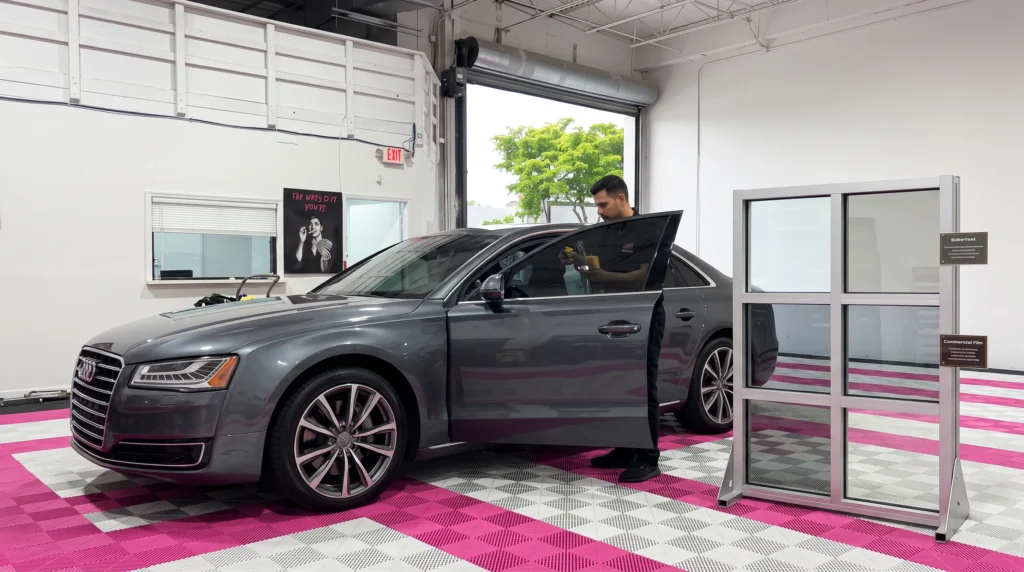
We welcome automotive customers from Tamarac, FL, Davie, FL, Fort Lauderdale, FL, Miami, FL, Broward County, FL, Miami-Dade County, FL, and surrounding communities.
Frequently Asked Questions About Window Tinting in Tamarac, FL
1. What’s the Difference Between Automotive Tint and Storefront Window Film?
Automotive window tint is designed for suitable vehicle glass, including side windows and rear glass. Storefront film is made for building windows and may focus on heat control, privacy, decoration, or glass-fragment retention. The products have different compatibility and installation requirements. A film approved for car windows should not automatically be installed on a commercial storefront.
2. Does 305 Auto Customs Offer Both Auto and Storefront Window Tinting in Tamarac, FL?
305 Auto Customs currently advertises STEK and Geoshield ceramic automotive window tint. Storefront architectural film installation is not listed as a confirmed service on the published service page. Contact the shop at (305) 788-9933 to ask whether a particular commercial glass project can be accommodated before scheduling.
3. What Is the Legal Automotive Window Tint Percentage in Florida?
Florida generally requires at least 28% VLT on front side windows. Ordinary passenger cars must generally meet a 15% VLT minimum for covered rear windows, while qualifying multipurpose passenger vehicles may have a 6% minimum under the applicable provision. Reflectance limits also apply. The final glass-and-film combination must comply with the law.
4. Can Storefront Film Reduce Heat Without Making the Windows Very Dark?
Yes. Certain architectural solar-control films are designed to reduce solar heat gain while preserving much of the visible daylight. Their performance depends on the exact product and glass construction. Compare visible light transmission, solar heat gain characteristics, and exterior appearance before choosing. The glass must also be compatible with the proposed film.
5. Does Reflective Storefront Window Film Provide Privacy at Night?
Not necessarily. Reflective daytime privacy generally works best when the outside is brighter than the inside. After sunset, bright interior lighting can make a store more visible from outdoors. Frosted or obscuring film may work better where continuous visual privacy is required, though it also changes the ability to see outside.
6. Can Storefront Window Tint Protect Against Hurricanes?
Ordinary solar-control film does not make storefront glass hurricane-rated. Certain safety films may help retain broken fragments under specified conditions, but they are not automatically approved as hurricane or wind-borne-debris protection. Florida property owners should rely on properly approved impact glazing, shutters, or other compliant storm protection systems.
7. How Can I Request Window Tinting in Tamarac, FL?
Call 305 Auto Customs at (305) 788-9933 or visit 305autocustomsfl.com/contact-us. Our Miami, FL shop provides automotive ceramic window tint for customers from Tamarac, FL and surrounding South Florida communities. If your project involves a retail storefront or commercial building, explain that when contacting us so the team can confirm service availability.
Sources
The following resources support the information about automotive and architectural window films, solar performance, glass compatibility, Florida tint laws, storefront considerations, and services offered by 305 Auto Customs.
1. About Tamarac
- Publisher: City of Tamarac, Florida
- Publication Date: Not listed
- URL: About Tamarac
- Reference: Tamarac’s location in Broward County, commercial areas, and connections to the greater South Florida region.
2. Window Tint Services
- Publisher: 305 Auto Customs
- Publication Date: Not listed
- URL: 305 Auto Customs Automotive Window Tint
- Reference: STEK and Geoshield ceramic automotive window tint, vehicle coverage options, warranties, and service areas.
3. Contact 305 Auto Customs
- Publisher: 305 Auto Customs
- Publication Date: Not listed
- URL: 305 Auto Customs Contact Page
- Reference: Shop address, phone number, automotive services, and appointment inquiries.
4. SMART+ Nano-Ceramic Window Tint
- Publisher: STEK USA
- Publication Date: Not listed on the referenced page
- URL: STEK SMART+ Ceramic Window Film
- Reference: Automotive film construction, VLT, TSER, infrared energy rejection, UV rejection, and warranty information.
5. Window Films for Architectural Design
- Publisher: 3M
- Publication Date: Not listed
- URL: 3M Architectural Window Film
- Reference: Architectural solar-control, privacy, insulation, safety, and security film categories. Included as general commercial film examples, not confirmed 305 Auto Customs products.
6. Privacy and Glare
- Publisher: International Window Film Association
- Publication Date: Not listed
- URL: IWFA Privacy and Glare
- Reference: Privacy films, glare control, decorative applications, and film use in commercial spaces.
7. Window Types and Technologies
- Publisher: U.S. Department of Energy
- Publication Date: Not listed on the current page
- URL: DOE Window Types and Technologies
- Reference: Insulated glazing, low-E coatings, solar heat gain, and visible daylight transmission.
8. Frequently Asked Questions About Window Film
- Publisher: International Window Film Association
- Publication Date: Not listed
- URL: IWFA Window Film FAQ
- Reference: Film-to-glass compatibility, thermal stress, low-E glass, UV rejection, fading, and cleaning methods.
9. Architectural Safety and Security Films
- Publisher: 3M
- Publication Date: Not listed
- URL: 3M Safety and Security Window Films
- Reference: Commercial safety film, anti-graffiti film, and Florida restrictions on hurricane protection claims.
10. Building Code Information
- Publisher: City of Tamarac, Florida
- Publication Date: Not listed
- URL: Tamarac Building Code Information
- Reference: Florida Building Code, Broward County requirements, and the city’s role in reviewing building work.
11. Permits and Inspections
- Publisher: City of Tamarac, Florida
- Publication Date: Not listed
- URL: Tamarac Permits and Inspections
- Reference: Determining applicable permits, approval procedures, and property-related requirements.
12. Florida Statutes, Section 316.2951: Motor Vehicle Windows; Definitions
- Publisher: The Florida Senate
- Publication Date: 2026 statutory edition
- URL: Florida Motor Vehicle Window Definitions
- Reference: Vehicle classifications, transmittance, reflectance, and window definitions.
13. Florida Statutes, Section 316.2952: Windshields
- Publisher: The Florida Senate
- Publication Date: 2026 statutory edition
- URL: Florida Windshield Tint Restrictions
- Reference: Windshield sunscreening restrictions and permitted transparent upper strips.
14. Florida Statutes, Section 316.2953: Front Side Windows
- Publisher: The Florida Senate
- Publication Date: 2026 statutory edition
- URL: Florida Front Side Window Tint Law
- Reference: Front side window VLT and visible-light reflectance requirements.
15. Florida Statutes, Section 316.2954: Windows Behind the Driver
- Publisher: The Florida Senate
- Publication Date: 2026 statutory edition
- URL: Florida Rear Window Tint Law
- Reference: Rear-window tint limits for passenger cars and qualifying multipurpose passenger vehicles.
16. Florida Statutes, Section 316.2955: Compliance Labeling
- Publisher: The Florida Senate
- Publication Date: 2026 statutory edition
- URL: Florida Tint Compliance Labeling
- Reference: Aftermarket film compliance labels and measurement tolerances.
17. Window Film Inspection Guidelines
- Publisher: International Window Film Association
- Publication Date: Not listed on the current page
- URL: IWFA Inspection Guidelines
- Reference: Film appearance, installation moisture, drying expectations, and inspection considerations.
Is Ceramic Coating Worth It for Your Car in Davie, FL? | 305 Auto Customs
Is ceramic coating worth it for your car in Davie, FL? Learn how ceramic coating helps keep paint cleaner, adds gloss, and makes car care easier in South Florida.
Product Brand: Malbor Coatings
5
Pros
- Is ceramic coating worth it for your car in Davie, FL? Learn how ceramic coating helps keep paint cleaner, adds gloss, and makes car care easier in South Florida.
